
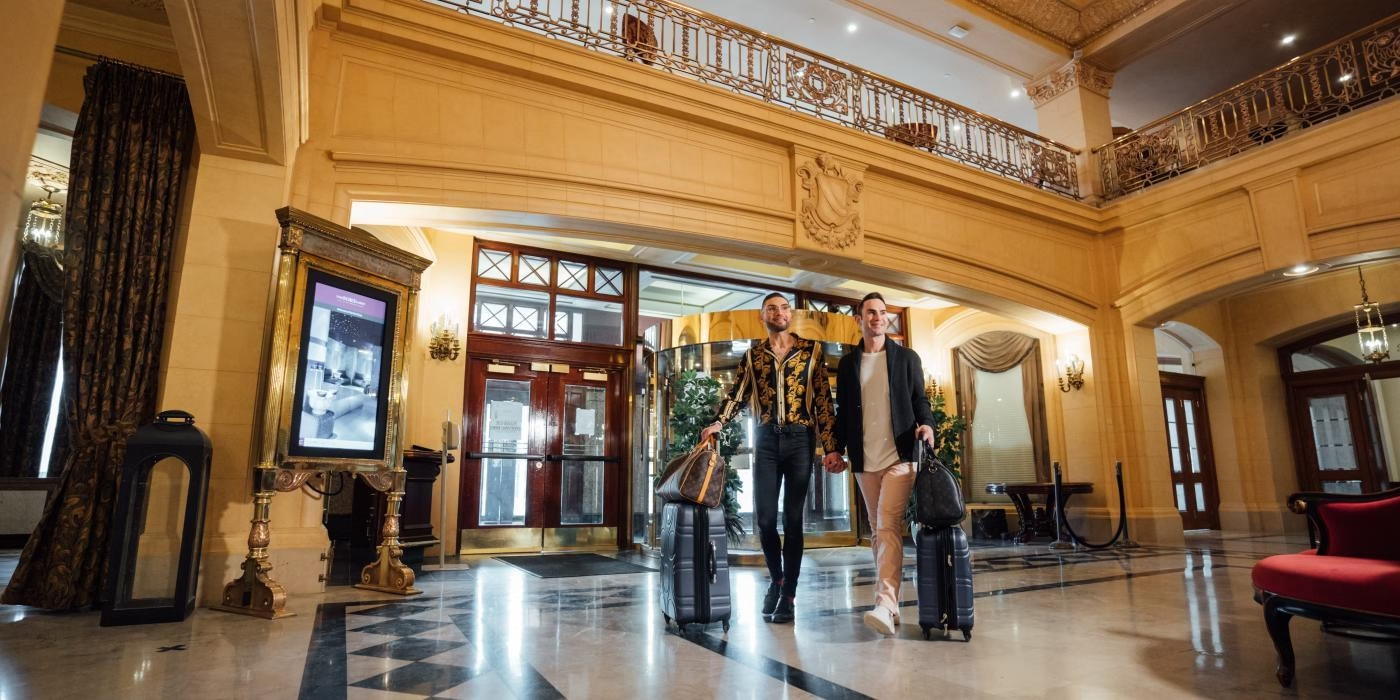
Luxury travel in 2026 is shifting away from a narrow focus on marble lobbies, butler service, and recognizable hotel brands. Affluent travelers increasingly want privacy, flexibility, wellness, local access, and experiences that feel personal rather than performative. Five-star travel still matters, but the definition is changing: travelers are judging luxury less by visible excess and more by time saved, stress reduced, and relevance to how they actually want to travel.
Luxury travel has not become less ambitious in 2026. If anything, affluent travelers are spending with more intention and asking more of every trip. What has changed is the definition of what makes a trip feel truly premium. Traditional markers of five-star travel—grand hotel suites, Michelin-level dining, private transfers, and impeccable service—still matter. But they are no longer enough on their own.
A growing share of high-end travelers now evaluates a trip through a different lens: How much friction did it remove? How deeply did it connect them to a place? Did it protect their time, energy, privacy, and health? And did it feel memorable for the right reasons rather than merely expensive?
That shift is showing up across luxury hotels, cruise lines, private travel design, wellness resorts, and premium aviation. American Express Travel’s 2026 Global Travel Trends report highlights a travel market increasingly shaped by experience quality and personal priorities rather than generic prestige. Virtuoso’s 2026 Luxe Report similarly points to demand for slower itineraries, fewer crowds, more cultural immersion, and meaningful wellness, while McKinsey has noted that luxury travelers continue to show a disproportionate appetite for experience-led and adventure-oriented trips.
For U.S. travelers in particular, the redefinition of five-star travel is less about rejecting luxury than refining it. The traveler who once wanted the “best room at the best hotel” may now want the right room in the right setting, with the right access, at the right pace. That is a meaningful distinction—and it helps explain why luxury travel in 2026 feels more personal, more strategic, and in many cases, more grounded than the glossy version of five-star travel that dominated the pre-pandemic era.
What does “five-star travel” mean in 2026?
In practical terms, five-star travel in 2026 still implies a high standard of comfort, service, design, and reliability. But among experienced luxury travelers, the term increasingly refers to the quality of the overall journey rather than the formal rating on a property’s plaque.
That means travelers are looking beyond star classifications and asking more nuanced questions:
- Will this trip give me access to a destination in a way I could not easily arrange myself?
- Will the property or travel advisor save me time and reduce decision fatigue?
- Does the experience feel tailored to my habits, preferences, and travel style?
- Is the luxury visible only in the finishes, or also in the logistics, privacy, and pacing?
- Will I return home feeling restored, enriched, or better connected to the place I visited?
This matters because traditional luxury signals have become easier to replicate. Upscale design, premium bedding, and a polished spa menu are now common across a much wider range of hotels. What remains harder to replicate is orchestration: thoughtful arrival experiences, local credibility, excellent staff judgment, flexible problem-solving, and itinerary design that feels effortless rather than overproduced.
In other words, five-star travel is becoming less about display and more about delivery.
Why are luxury travelers rethinking the old model?
There is no single reason. Several forces are converging at once, and together they are changing expectations.
1) Affluent travelers are spending more carefully, not necessarily less
Luxury travelers are still willing to spend, but they want that spending to feel justified. This does not always mean hunting for discounts. It often means being selective about where the money goes.
For example, a couple planning a 10-day Italy trip may gladly pay for a top-tier travel advisor, private airport assistance, and a smaller hotel with strong concierge access—but skip the oversized suite if they know they will spend most of the day outside the room. Another traveler might book business class and a high-touch wellness resort, but choose one destination instead of three to reduce transit fatigue and make the trip feel more restorative.
This is not “trading down” in the traditional sense. It is reallocating the budget toward elements that improve the lived experience of the trip.
2) Time has become one of the most important luxury assets
High-income travelers increasingly treat time as the scarce resource they are really buying back. That shows up in preferences for nonstop routes, smoother airport handling, pre-arranged transport, fewer hotel changes, and destinations that offer more depth with less friction.
A luxury trip that requires constant movement, multiple check-ins, and tightly packed sightseeing can look impressive on paper but feel exhausting in practice. In 2026, many travelers are actively resisting that kind of itinerary.
Virtuoso’s reporting on 2026 demand points to slower travel and fewer crowds as meaningful priorities, and that aligns with what many advisors and luxury operators are seeing: travelers want premium experiences that reduce overstimulation rather than amplify it.
3) Wellness has moved from “nice extra” to core expectation
Wellness is no longer confined to a spa treatment menu and a fitness center with Pelotons. In luxury travel, wellness now often includes sleep quality, air quality, food flexibility, stress reduction, digital boundaries, movement, longevity-focused programming, and space for genuine rest.
This matters because affluent travelers are increasingly using travel not only to celebrate or escape, but also to reset. Vogue Business has reported on the way luxury hospitality is expanding into deeper wellness offerings and lifestyle programming, reflecting a broader shift in what guests expect from premium stays.
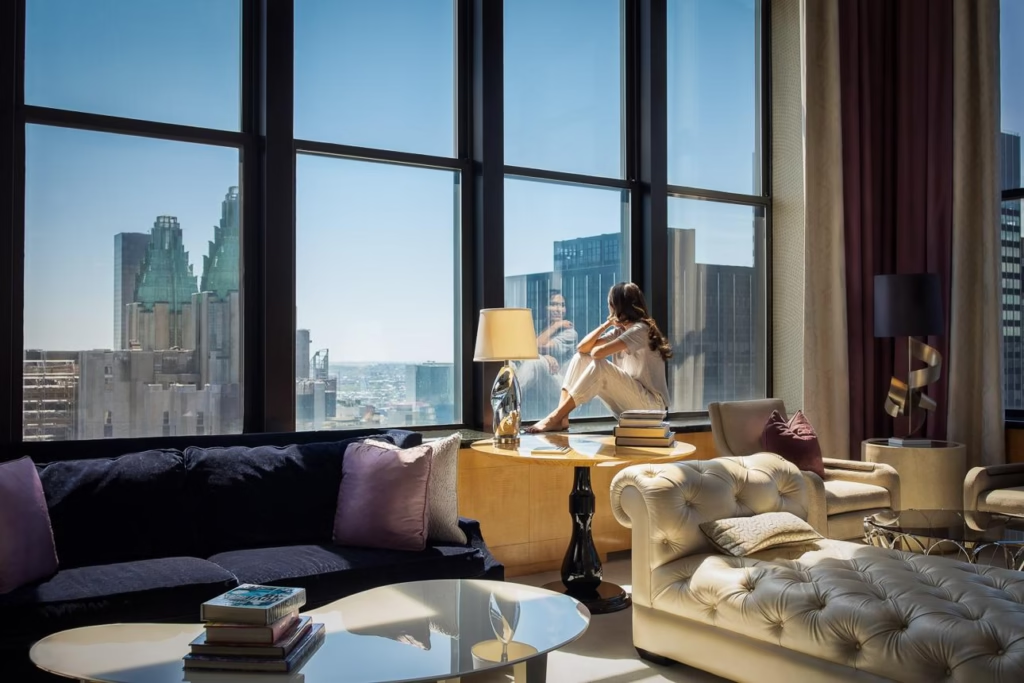
A five-star stay in 2026 may therefore be judged less by whether it offers a lavish spa and more by whether the guest actually sleeps better, eats well without effort, has room to recover from jet lag, and can maintain routines that matter to them.
4) Status is moving from visible excess to privileged access
There was a time when luxury travel status was easy to read from the outside: first-class cabins, famous hotel brands, large suites, and obvious opulence. Those markers still exist, but status has become subtler.
Today, a more modern status signal might be:
- staying in a small property that is difficult to book but deeply respected,
- having after-hours access to a cultural site,
- joining a highly curated food or art experience unavailable to most tourists,
- booking a villa or yacht that prioritizes privacy over spectacle,
- or working with an advisor who can open doors that standard booking platforms cannot.
This helps explain why “authenticity” has become such a common word in luxury travel—although it is often used too loosely. In practice, affluent travelers are not necessarily looking for rustic simplicity. They are looking for experiences that feel credible, insider-led, and hard to mass-produce.
The new pillars of five-star travel in 2026
If luxury travelers are redefining five-star travel, what are they replacing the old model with? In most cases, the answer is not one new standard but a set of overlapping priorities.
1. Privacy that feels useful, not theatrical
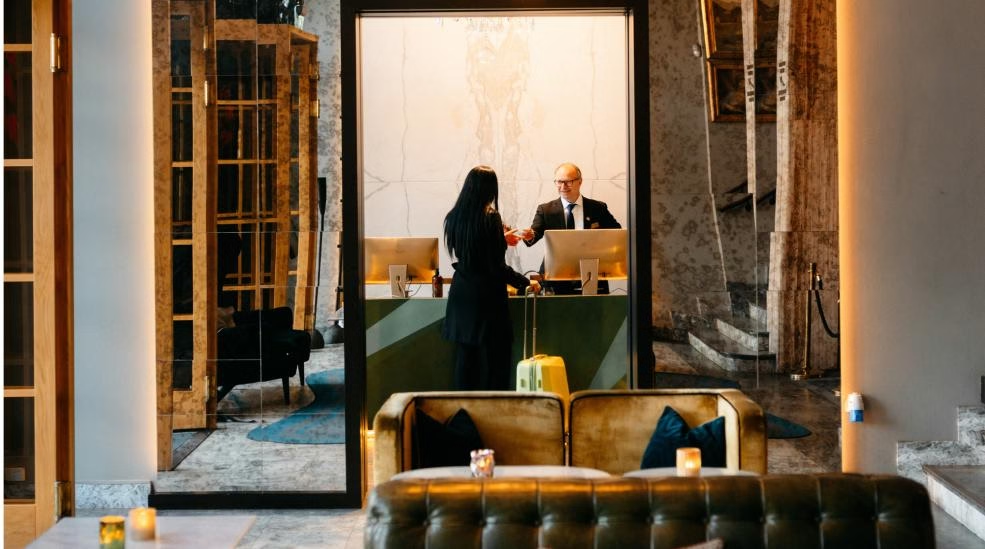
Privacy has become one of the strongest drivers in premium travel. But the desire is not always about celebrity-style seclusion. More often, it is about control: avoiding crowded public spaces, protecting family time, minimizing interruptions, and reducing exposure to the most stressful parts of travel.
For some travelers, that means private airport transfers and discreet check-in. For others, it means a villa with hotel-style service, a residence-style suite with a kitchen and separate living space, or a ship-within-a-ship concept on a luxury cruise.
Useful privacy is different from decorative privacy. It is not just about being hidden. It is about making the trip easier to inhabit on your own terms.
2. Fewer destinations, deeper immersion
One of the clearest shifts in high-end travel planning is the move away from overpacked itineraries. Luxury travelers are increasingly willing to see less in order to experience more.
Consider the difference between two versions of a premium Japan trip:
- Old five-star model: Tokyo, Kyoto, Osaka, Hakone, and a ryokan stop, all in nine days, with every day tightly scheduled.
- 2026 luxury model: Tokyo and Kyoto only, but with longer stays, private guiding tailored to personal interests, a great restaurant strategy, one or two exceptional cultural experiences, and unstructured time built in.
The second version may appear less “maximized,” but it often delivers a better luxury outcome. The traveler spends less time in transit, settles into each place, and gains a stronger sense of context. Condé Nast Traveler’s early 2026 trend reporting also reflects a broader appetite for slower, more intentional forms of travel rather than checklist tourism.
3. Service that adapts instead of merely performs
Classic luxury hospitality prized visible attentiveness. In 2026, the most valued service is often quieter and more adaptive. Travelers increasingly appreciate staff who can read preferences, solve problems without ceremony, and respond intelligently when plans change.
That might mean:
- adjusting dining reservations because a child is overtired,
- reworking a day trip when weather shifts,
- stocking a room around dietary preferences without making the guest ask twice,
- or noticing that a traveler arriving from a long-haul flight needs a simpler first evening than the itinerary originally suggested.
This type of service feels luxurious because it respects context. It does not ask the guest to perform luxury. It supports the guest’s actual life.
4. Wellness that fits real travel behavior
The next generation of luxury wellness is less about looking virtuous and more about being practical. Travelers want wellness that can survive contact with a real itinerary.
For a business owner extending a work trip into a long weekend, that may mean a hotel that can deliver excellent sleep conditions, healthy in-room dining, a strong gym, and easy access to outdoor movement. For a family on a luxury beach trip, it may mean a resort where children’s programming is thoughtful enough to give parents genuine downtime. For a solo traveler, it could mean a property with structured wellness classes but no pressure to turn the vacation into a self-optimization retreat.
The common thread is integration. Wellness becomes part of the trip’s architecture rather than an optional add-on.
5. A stronger connection to place
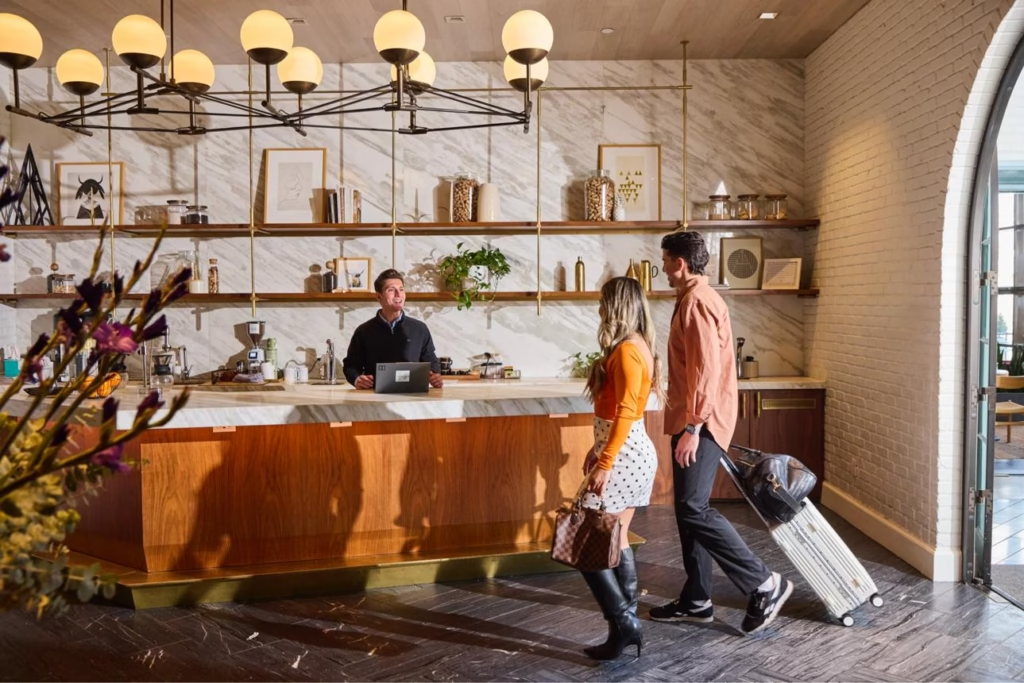
Luxury travelers still want comfort, but many no longer want to feel interchangeable from one destination to the next. A five-star stay in Santa Barbara, Charleston, Jackson Hole, or Kyoto should not feel like the same hotel dropped into a different zip code.
That is why design, food, guiding, and programming that reflect the destination matter more than they once did. The best luxury travel now often combines global standards of comfort with a local point of view. This could mean regional ingredients handled well, architecture that respects local context, access to historians or craftspeople, or neighborhood-level recommendations that go beyond the obvious.
The point is not to make affluent travelers “rough it” for authenticity. It is to make the luxury feel rooted rather than generic.
What does this shift look like in real travel decisions?
For U.S. travelers planning premium trips in 2026, the redefinition of five-star travel shows up in very concrete booking behavior.
Hotels: smaller, sharper, and more residential
Some travelers are moving away from the biggest trophy properties and toward hotels that offer a stronger sense of place, more intuitive service, and a calmer footprint. That does not mean abandoning major brands; it means expecting more than brand reassurance alone.
In cities, travelers may prioritize:
- a suite with a living area over a larger but less practical room,
- a hotel in a walkable neighborhood over one in the “luxury district,”
- or a property with an exceptional concierge and restaurant strategy over one with the flashiest lobby.
Flights: premium cabin where it counts, not automatically everywhere
Luxury travelers still value premium air travel, but many are becoming more strategic. They may pay for lie-flat seats on overnight long-haul flights, then fly economy or premium economy on shorter daytime segments if the trade-off feels reasonable. The luxury standard becomes outcome-based: arrive rested where it matters most.
Cruises and yachting: space, pacing, and access
High-end cruise demand continues to benefit from travelers who want a more contained, less logistically heavy way to see multiple places. But even here, the emphasis is shifting toward itinerary quality, suite privacy, onboard wellness, and shore experiences that avoid feeling like mass-market excursions.
Advisors: human curation is regaining value
As online booking tools become more powerful, the role of the luxury travel advisor is not disappearing. It is becoming more specialized. Travelers are turning to advisors for complex routing, high-demand reservations, villa matching, destination sequencing, and on-the-ground troubleshooting—especially when the trip budget is high enough that mistakes become expensive.
That is part of the new five-star equation too: expert planning can be a luxury product in its own right.
How should travelers evaluate luxury trips now?
If you are planning a high-end trip in 2026, it helps to stop asking, “What is the most luxurious option?” and start asking, “What kind of luxury will actually improve this trip?”
A useful framework is to evaluate a trip across six questions:
- Where will paying more remove meaningful friction?
Think airport handling, room category, private transfers, or a better-located property. - What kind of privacy do I actually want?
Quiet? Family space? Security? A villa may matter more than a penthouse. - How much movement do I realistically want?
More destinations are not always better if transit erodes the trip. - What will help me feel well while traveling?
Sleep, food, movement, downtime, and recovery deserve the same planning attention as dining reservations. - Which experiences would be hard to arrange without expert help?
Those are often the best places to allocate budget. - What do I want to remember about this trip six months from now?
If the answer is not “the bathroom size” or “the thread count,” that tells you something.
Is traditional five-star luxury disappearing?
No. There will always be demand for grand hotels, polished formal service, elite suites, and highly visible luxury. Those experiences still matter, and for many travelers they remain deeply appealing.
What is changing is that they are no longer the sole benchmark. Travelers with money and experience increasingly want luxury to function as a form of support rather than theater. They want premium travel to feel smoother, healthier, more private, more meaningful, and more aligned with how they live.
That is why the future of five-star travel does not look like the end of luxury. It looks like a more mature version of it.
FAQ: What travelers are asking about luxury travel in 2026
1) Why are luxury travelers spending differently in 2026?
Because many affluent travelers are prioritizing value within premium travel rather than spending indiscriminately. They are still paying for comfort and access, but increasingly channeling money toward privacy, better logistics, wellness, and more personalized experiences.
2) Is luxury travel still growing even with economic uncertainty?
Broadly, yes. High-end travel demand has remained resilient, and affluent consumers continue to spend on travel experiences, though often with more selectivity and clearer expectations around quality and usefulness.
3) What matters more now: the hotel brand or the experience?
For many travelers, the experience matters more. A trusted brand can still be valuable, but travelers are increasingly willing to choose smaller or independent properties if the service, location, design, and local access better match the trip.
4) Are luxury travelers taking fewer trips or just different ones?
Often different ones. Some are still traveling frequently, but they may build fewer stopovers into each trip, stay longer in one place, or spend more on one well-planned experience instead of trying to do everything at once.
5) Why is wellness so important in luxury travel now?
Because travelers increasingly see premium travel as a chance to restore energy, sleep better, eat well, and reduce stress. Wellness has expanded from spa services into a broader expectation around how the trip should support physical and mental well-being.
6) Is private travel only about exclusivity?
Not necessarily. Privacy is often about convenience, control, and comfort rather than status. Families, executives, and multigenerational travelers may value privacy because it simplifies the trip and protects downtime.
7) Are travel advisors still worth using for luxury trips?
Often yes, especially for complex itineraries, villa rentals, high-demand destinations, cruise planning, and special-access experiences. A strong advisor can save time, reduce mistakes, and unlock value that is not obvious online.
8) What does “authentic luxury” actually mean?
At its best, it means a high-end experience that still feels connected to the destination rather than generic. That could include local design, thoughtful guiding, strong food culture, or access to people and places that reflect the character of the region.
9) Are luxury travelers moving away from big-name five-star hotels?
Some are, but not universally. Many still use major brands, especially where consistency matters. The shift is more about being open to smaller, more specialized properties when those properties offer a better fit.
10) What is the biggest mistake luxury travelers make today?
Trying to maximize a trip instead of optimize it. Overpacking the itinerary, changing hotels too often, or chasing prestige over practicality can make an expensive trip feel more stressful than satisfying.
The New Luxury Test: What a Five-Star Trip Must Deliver Now
The clearest lesson from luxury travel in 2026 is that premium travel is no longer judged only by what it shows. It is judged by what it solves. A five-star trip should still feel beautiful, comfortable, and special. But for today’s traveler, that is the baseline—not the full promise.
The stronger test is whether the trip protected your time, reduced friction, respected your preferences, and left you with a sharper sense of place rather than a blur of expensive moments. That is why luxury travelers are redefining five-star travel. They are not lowering the standard. They are making it more demanding, more personal, and in many cases, more intelligent.
At-a-Glance Signals Shaping Luxury Travel in 2026
- Luxury travelers are shifting from visible excess toward meaningful convenience, privacy, and personalization.
- Slower itineraries and deeper immersion are often preferred over destination stacking.
- Wellness now includes sleep, food, recovery, and emotional ease—not just spa treatments.
- High-end travelers are more selective about where premium spending creates real value.
- Smaller hotels, residence-style stays, and locally grounded experiences are gaining appeal.
- Travel advisors remain valuable when complexity, access, and customization matter.
- Five-star travel increasingly means friction removed, not just amenities added.
- The best luxury trips now feel less performative and more precisely designed around the traveler.





Leave a Reply