
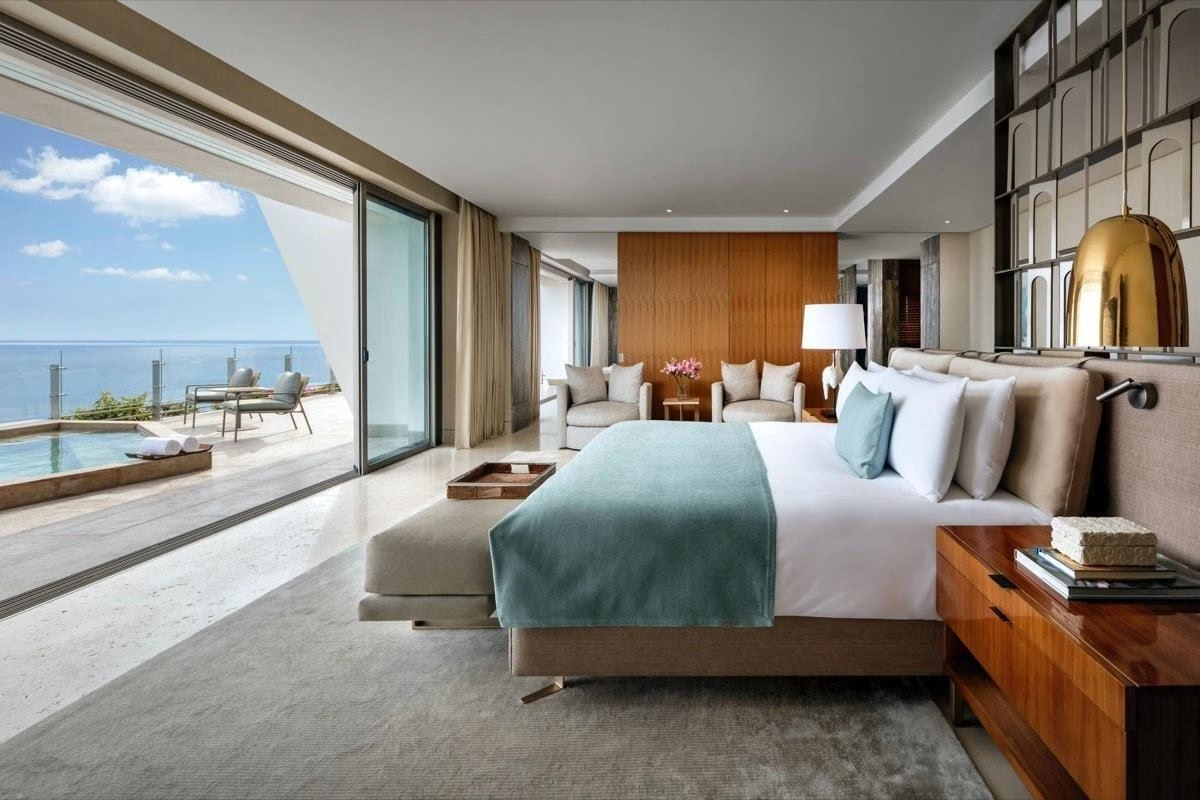
Luxury travel in 2026 is less about public displays of extravagance and more about control, comfort, and time. Affluent Americans are increasingly prioritizing private villas, residential-style suites, tailored itineraries, and longer stays that blend leisure, wellness, work flexibility, and family time. The result is a more intentional luxury market shaped by privacy concerns, personalized service, and a growing preference for slower, more immersive travel.
Luxury travel is changing—and not just at the very top of the market
For years, luxury travel in the American imagination was easy to picture: first-class flights, famous five-star hotels, iconic destinations, and a packed itinerary of exclusive reservations. In 2026, that model still exists, but it no longer captures the full picture of how affluent Americans are traveling.
The more useful way to understand luxury travel now is to think in terms of control. High-income travelers are increasingly willing to pay not simply for nicer surroundings, but for fewer compromises: more privacy, more personalization, more time in one place, and fewer points of friction between booking and arrival. A luxury trip in 2026 is often designed to feel less like a performance and more like a well-run private life in another location.
That shift is showing up across hotels, villa rentals, private aviation, cruise design, and travel planning. Advisors are reporting sustained luxury demand into 2026, with many expecting spending to remain flat or rise modestly rather than pull back sharply. Virtuoso’s 2026 Luxe Report, for example, points to continued strength in luxury demand and spending expectations, while broader market research suggests the U.S. luxury travel market remains on a long growth path.
For affluent American travelers, the practical question is no longer “What’s the fanciest trip I can book?” It’s closer to: What kind of trip gives me privacy, flexibility, and a better use of my time?
The defining luxury travel priorities in 2026
Three priorities now sit at the center of many high-end trips:
- Privacy: fewer crowds, less exposure, more secure and self-contained spaces
- Personalization: itineraries, dining, transportation, and pacing tailored to the traveler rather than the property
- Longer stays: more travelers extending trips into one- or two-week stays, month-long villa rentals, or hybrid “work from anywhere” luxury breaks
These aren’t isolated trends. They reinforce each other. A family that books a villa for 12 nights instead of a hotel for four wants private space, flexible dining, kid-friendly logistics, and room to settle into a destination. A couple planning a milestone trip may want a residential-style suite, a private guide, and extra days on the ground so the trip feels restorative rather than rushed.
In other words, luxury in 2026 often looks less like “more” and more like better fit.
Why privacy has become one of the strongest luxury selling points
Privacy is one of the clearest shifts in the upper end of the market. For some travelers, that means discretion rather than celebrity-level secrecy: avoiding crowded lobbies, limiting social exposure, and having more control over who has access to them and their family. For ultra-high-net-worth travelers, it can mean private homes, gated estates, private island buyouts, security teams, and non-disclosure agreements built into trip planning.
Business reporting over the past year has highlighted how privacy is increasingly treated as a status marker in its own right, with wealthy travelers choosing private villas and homes over traditional hotels because hotels can feel too visible, even when they are luxurious.
For affluent Americans who are not chartering a private island, the privacy shift still matters because it influences what kinds of accommodations are winning bookings. Properties with the following features are particularly well positioned:
- Standalone villas, bungalows, or branded residences
- Private entrances or low-profile check-in options
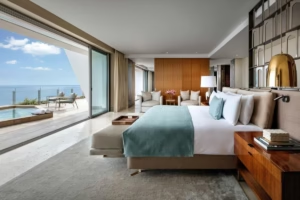
- Large suites with outdoor space and separate living areas
- In-room or in-villa dining of genuinely high quality
- Dedicated butler or concierge service that reduces the need to “go through the lobby” for everything
- Family compounds or multi-bedroom residences that let groups stay together without sacrificing personal space
This is one reason residential hospitality has become so important. The luxury traveler who wants privacy often does not want to feel cut off from service; they want hotel-level support without hotel-level exposure.
Personalization now goes far beyond monogrammed welcome gifts
Luxury travel has always included a service component, but personalization in 2026 is becoming more operational and less ornamental. It’s no longer enough to remember a guest’s favorite bottle of Champagne. Affluent travelers increasingly expect the entire trip to reflect how they actually live, eat, work, rest, and move.
That can include obvious things—dietary preferences, room configuration, transportation style—but the more meaningful examples are often logistical:
- A hotel knows a family wants early dinners, a sitter referral, connecting rooms, and a car seat waiting at the airport.
- A wellness-focused traveler receives a schedule designed around sleep recovery, training, low-alcohol dining, and spa treatments that don’t crowd the day.
- A couple on a two-week Italy trip is booked into a quieter lake property first, then a city hotel, then a villa, so the pace of the trip improves rather than deteriorates.
- A multigenerational group gets one itinerary for grandparents, one for teenagers, and one shared plan for evenings and key excursions.
Visa’s 2025 affluent travel research found strong demand for personalized, off-the-beaten-path experiences, while broader luxury travel market research continues to point to customized itineraries and curated experiences as major growth drivers.
For travelers, this means the value of a luxury booking is increasingly tied to trip design rather than just nightly rate. A $2,500-per-night hotel that still forces guests into generic dining slots, standard check-in friction, and inflexible transport planning may feel less luxurious than a smaller property or villa that actually adapts around the guest.
Longer stays are reshaping what “high-end vacation” means
One of the most important changes in luxury travel is the length of stay. Affluent Americans are increasingly using luxury travel not only for short celebratory trips, but also for extended resets, family time, hybrid work breaks, school-holiday relocations, and “slow travel” experiences that reduce transit fatigue.
There are several reasons this matters.
First, longer stays change the accommodation math. A four-night city hotel stay and a 14-night coastal stay are different products. Once travelers stay longer, they care more about laundry, kitchen access, living space, outdoor space, child logistics, workspace quality, and neighborhood feel. They may still want a hotel, but they want a hotel that behaves more like an upscale residence.
Second, longer stays change destination choice. Travelers become more willing to pick places that are livable rather than merely photogenic. A destination with excellent restaurants, walkability, wellness services, golf, hiking, childcare, and a comfortable climate may beat a “bucket list” destination that looks glamorous but becomes logistically tiring after three days.
Third, longer stays change spending patterns. Affluent travelers are still spending heavily, but they may allocate more of the budget to accommodation quality, private transport, staffing, and tailored experiences while reducing the frantic churn of paid excursions.
Research on U.S. stay patterns has shown a durable post-pandemic increase in longer bookings, including a thicker tail of month-plus stays. While that research is not limited to luxury travelers, it helps explain why hospitality companies across price points are building for longer, more flexible stays.
What affluent Americans are booking instead of the classic luxury hotel week
The traditional luxury hotel remains central to the market, but the winning formats in 2026 increasingly include accommodations that combine service with residential comfort.
1) Private villas and serviced homes
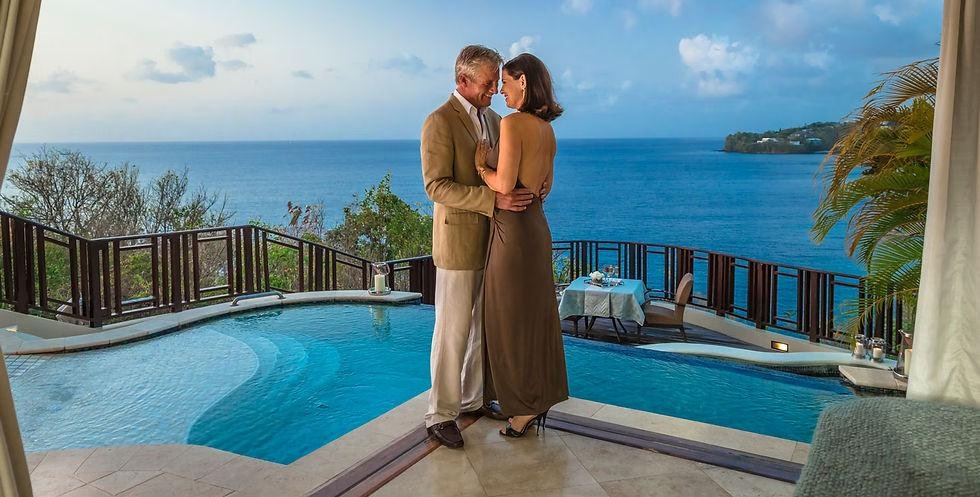
These are particularly attractive for families, groups, milestone trips, and travelers who value seclusion. The appeal is simple: more space, more control over meals and schedule, and a quieter social footprint. At the higher end, villas increasingly come with pre-stocked kitchens, private chefs, chauffeurs, nannies, and wellness staff.
2) Branded residences and residence-style suites
These appeal to travelers who want hotel infrastructure—housekeeping, spa, concierge, dining access—but also want a kitchen, living room, and a sense of separation. For a 10-day trip, that difference matters.
3) Smaller luxury properties with strong service ratios
Some affluent travelers are trading grand flagship hotels for smaller properties where the staff-to-guest ratio allows more attentive service and less crowding. The point is not necessarily to avoid luxury brands; it’s to avoid feeling processed.
4) High-end expedition and private yacht travel
For some travelers, “longer stay” doesn’t mean staying in one place. It means a slower, curated journey with a controlled guest count and high-touch service. Expedition cruising, private yacht charters, and small-ship cultural itineraries can meet that need when designed well.
5) Urban luxury stays with residential features
In major cities such as New York, London, Tokyo, and Paris, affluent travelers still want the center-of-gravity benefits of a great hotel. But they increasingly look for suite inventory, private lounge access, quiet entrances, and the ability to spend a week in the city without feeling confined to a standard room.
The new luxury itinerary: fewer stops, more depth
One of the clearest planning changes in 2026 is the move away from overly ambitious itineraries. Many affluent travelers are actively reducing the number of destinations per trip.
That does not mean they are traveling less ambitiously. It means they are less interested in spending a premium budget on constant transitions. A 12-night trip that includes two destinations, private transfers, recovery time, and local experiences often feels more luxurious than a six-city sprint with a premium hotel at every stop.
A more contemporary luxury itinerary might look like this:
- Four nights in a city for dining, museums, shopping, and a few guided experiences
- Seven nights in a resort or villa for beach, wellness, golf, boating, or family time
- One or two structured “signature” experiences rather than daily scheduling pressure
- Planned empty time for spontaneity, rest, and weather flexibility
This is one reason travel advisors remain influential at the high end. Personalization becomes much more valuable when the goal is not simply to reserve rooms, but to shape the rhythm of a trip.
Luxury family travel is becoming more residential, not more formal
A major driver of longer, more private luxury stays is family travel. Affluent American families are increasingly booking trips that need to function for adults and children at the same time. That pushes demand toward villas, family suites, adjoining rooms, and destinations where high-end service coexists with practical convenience.
The best luxury family trips in 2026 are often the least theatrical. They are the trips where the details quietly work:
- The airport transfer has the right child seats and enough luggage space.
- The villa has a heated pool, blackout shades, and a stocked fridge.
- The hotel can arrange age-appropriate activities without turning the experience into a theme park.
- Dinner can happen privately on the terrace when children are too tired for a restaurant.
- Grandparents have enough privacy to enjoy the trip rather than endure it.
That may not sound glamorous in the traditional sense, but it is exactly the kind of friction reduction affluent travelers are willing to pay for.
Wellness, climate comfort, and “feeling better when you get home”
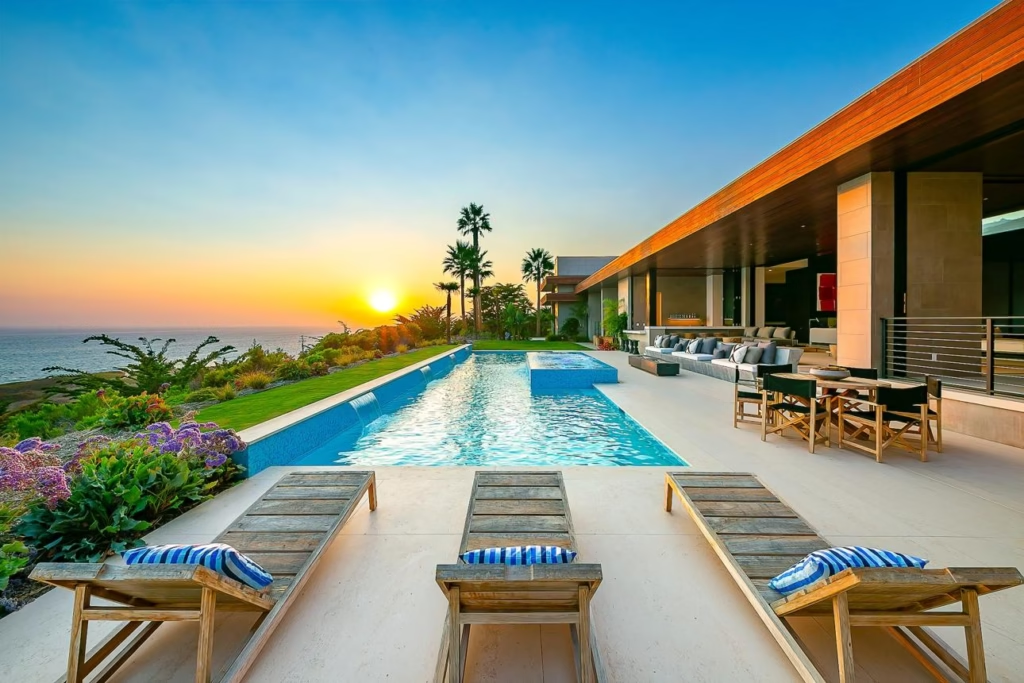
Luxury travel in 2026 is also being shaped by wellness, but not only in the spa-retreat sense. More affluent travelers are evaluating trips based on how they will feel during and after them. That changes everything from flight choices to climate preferences to restaurant planning.
Some of the practical questions now shaping luxury bookings include:
- Will this destination be uncomfortably hot during the period we want to travel?
- Can I sleep well there?
- Is there enough space to exercise privately or work out with a trainer?
- Can we eat well without every dinner turning into a three-hour event?
- Is the trip restorative enough to justify the time and money?
Climate considerations are also affecting destination choices, particularly for summer travel. Coverage and industry commentary increasingly point to affluent travelers seeking cooler-weather destinations, shoulder-season escapes, and properties designed around comfort rather than old-school “peak sun” assumptions.
In practice, that can mean choosing coastal New England over a heat-stressed Mediterranean city in August, or booking a mountain resort with strong wellness infrastructure instead of a packed urban itinerary.
How technology fits into luxury travel without making it feel automated
Affluent travelers generally want technology to remove friction, not create novelty for its own sake. The most useful luxury travel technology in 2026 is often invisible:
- pre-arrival preference capture that actually informs the stay
- secure digital concierge communication
- integrated airport transfers and real-time itinerary updates
- room controls that are intuitive rather than theatrical
- flexible payment and booking tools for multi-component itineraries
At the same time, privacy remains a real concern. Research into travel-stage privacy attitudes suggests that traveler comfort with data sharing is nuanced and context dependent. That matters because personalization only works if travelers trust how their data is being used.
The lesson for travelers is straightforward: good luxury providers should be able to explain what information they need, why they need it, and how it improves the trip.
Where affluent Americans are most likely to spend more in 2026
Luxury budgets are still substantial, but the spending priorities are shifting. Rather than simply paying for prestige, affluent travelers are often directing more money to the parts of a trip that most affect comfort and control.
Common budget priorities now include:
- better air arrangements, including premium cabins, flexible fares, or private aviation on select legs
- larger accommodations, especially suites, villas, and residences
- private ground transport rather than frequent reliance on ride-hailing or hotel taxis
- tailored food and beverage planning, including chefs, pre-stocked kitchens, or hard-to-book reservations handled in advance
- specialist guides and local access rather than generic tours
- wellness and recovery services, from in-room treatments to sleep-focused programming
Interestingly, this can make some luxury trips feel more “quiet” than luxury travel of the past. A family may spend more overall while appearing to do less publicly, because the money is going toward space, discretion, and quality-of-life details rather than visible spectacle.
How to plan luxury travel well in 2026 if privacy and personalization matter to you
For travelers considering a high-end trip, the most useful planning move is to start with how you want the trip to function, not where you want to post from. That sounds obvious, but it meaningfully changes the booking process.
A strong planning framework looks like this:
Start with the trip’s real purpose
Is this trip for rest, family connection, milestone celebration, food, wellness, remote work flexibility, or a mix? A trip designed for rest should not be built like a sightseeing sprint.
Decide how much privacy you actually want
Some travelers want a quiet suite in a great hotel. Others want a standalone villa and private transfers. Those are different products with different planning timelines and price structures.
Match the stay length to the accommodation type
If you are staying 10 nights or more, think carefully about whether a standard hotel room will still feel luxurious by day six. Often it will not.
Be specific about your non-negotiables
Good advisors and properties can personalize well if they know what matters: sleep, child logistics, dietary needs, workout access, security, or workspace quality.
Leave room in the itinerary
Luxury loses its value when every day is overbooked. Build in open mornings, recovery windows, and alternatives for weather or energy shifts.
Book earlier for the best villa and suite inventory
Privacy-driven inventory is finite. The best villas, residences, and signature suites often go first, especially in school-holiday windows and high-demand resort markets.
Frequently Asked Questions
1) What is considered luxury travel in 2026?
Luxury travel in 2026 generally means a high-comfort, high-service trip built around privacy, personalization, and reduced friction rather than simply expensive hotels. It often includes villas, suites, private transport, tailored itineraries, and longer stays.
2) Why are affluent Americans staying longer on luxury trips?
Longer stays allow travelers to justify long-haul flights, settle into a destination, combine work and leisure more comfortably, and reduce the stress of constant transitions. They also make residential-style accommodations more appealing.
3) Are private villas replacing luxury hotels?
Not entirely. Luxury hotels remain central to the market, but villas and branded residences are gaining share because they offer more space, privacy, and flexibility—especially for families and groups.
4) What does personalization in luxury travel actually include?
It can include tailored dining, transportation, room setup, guides, pacing, wellness programming, family logistics, and pre-arrival planning based on the traveler’s habits and preferences.
5) Is luxury travel demand still strong in 2026?
Current industry reporting suggests demand remains resilient, particularly among affluent travelers. Advisors continue to report strong interest in premium experiences, customized itineraries, and milestone travel.
6) What types of luxury accommodations are most popular right now?
Private villas, serviced homes, branded residences, multi-bedroom suites, boutique luxury properties, and premium expedition-style travel products are all benefiting from the shift toward privacy and longer stays.
7) How far in advance should a luxury trip be booked?
For peak-season villas, signature suites, and complex multigenerational trips, six to 12 months is often wise. Travelers with highly specific privacy or staffing requirements may want to plan even earlier.
8) Is using a luxury travel advisor still worth it?
For simple hotel stays, not always. For complex itineraries, privacy-sensitive bookings, milestone trips, or villa-based travel, a strong advisor can be valuable because they help with fit, access, pacing, and problem-solving.
9) How is wellness affecting luxury travel decisions?
Wellness now influences destination choice, trip pacing, dining, sleep planning, fitness access, and climate preferences. Many travelers want trips that feel restorative rather than exhausting.
10) What is the biggest mistake people make when planning a luxury vacation?
A common mistake is paying for premium accommodations while keeping a rushed, inflexible itinerary. Luxury value usually improves when the trip includes more space, fewer transitions, and services that reflect how the traveler actually wants to live on the road.
Where luxury travel is headed next
The most important thing to understand about luxury travel in 2026 is that it is becoming more residential, more selective, and more intentional. Affluent Americans are still willing to spend, but they are increasingly spending against inconvenience rather than simply toward prestige.
That distinction matters. It means the future of luxury travel is less about visible excess and more about invisible precision: the right room category, the right stay length, the right airport transfer, the right pace, the right degree of privacy, and the right people managing the details.
For travelers, that is a healthy shift. It pushes the market toward usefulness, not just aesthetics. The best luxury trip in 2026 is not necessarily the one with the biggest nightly rate or the most famous lobby. It is the one that feels calm, private, well-paced, and unmistakably built around the traveler using it.




Leave a Reply