
Island travel still holds unusual appeal because it combines what many travelers want most right now: a clear sense of place, easy access to water and nature, and a feeling of genuine escape without always requiring a complicated international trip. For U.S. vacationers, the smartest island choices increasingly come down to accessibility, value, weather resilience, crowd levels, and whether a destination feels restorative rather than merely photogenic.
The enduring pull of islands in a crowded travel market
There are few travel ideas as persistent as the island getaway. Even as vacation habits change—budgets tighten, weather patterns shift, and travelers become more selective about where their money goes—Americans continue to search for islands. The reasons are practical as much as emotional. Islands offer a built-in narrative: you leave the mainland, cross water, and arrive somewhere with a different pace, different rhythms, and often a stronger visual identity than a generic beach destination.
That matters in a travel market where people are increasingly trying to make fewer trips feel more meaningful. U.S. Travel projects domestic travel spending at roughly $1.20 trillion in 2026, underscoring how central domestic and near-home vacations remain to the U.S. leisure economy. At the same time, Deloitte’s 2026 summer travel survey suggests many travelers are more price-aware and less fully booked than in the prior year, a sign that aspiration still exists but planning has become more cautious.
Islands sit right in the middle of that tension. They feel special, but they can also be practical. For some travelers, that means Hawaii. For others, it means Puerto Rico, the Florida Keys, the San Juan Islands, Catalina, Martha’s Vineyard, or a quieter Gulf Coast barrier island. “Island vacation” no longer refers only to an expensive tropical splurge. Increasingly, it includes domestic island travel, shoulder-season trips, drivable island destinations, and itineraries built around snorkeling, hiking, food, culture, or multigenerational downtime rather than just a resort pool.
The smart U.S. traveler isn’t simply asking, “Which island is prettiest?” They’re asking more useful questions:
- Which island is easiest to reach without losing a full day to connections?
- Will this destination still feel worth the money if airfare spikes?
- Is it better for families, couples, solo travelers, or mixed-age groups?
- What happens if weather disrupts plans?
- Can I get both scenery and substance—good food, walkable towns, local culture, and worthwhile outdoor activities?
Those are the questions shaping island travel now.
Why islands still feel different from other vacations
Part of the answer is psychological. Water creates a boundary, and boundaries matter in travel. A mountain town can be beautiful, and a city can be exciting, but islands often deliver a stronger sense of separation from everyday life. The logistics of arriving by ferry, short flight, causeway, or boat can create a transition that feels more deliberate than pulling off an interstate exit into a beach resort zone.
But the appeal isn’t just emotional. Islands often deliver a combination that is harder to replicate elsewhere:
1) Natural variety in a compact footprint
A well-chosen island can give travelers beaches, trails, reef or wildlife excursions, historic districts, local seafood, and small-town wandering without requiring long drives every day. Oahu, Puerto Rico, Key West, and Catalina all work this way, though in very different styles.
2) A stronger sense of “place”
The best island trips feel rooted in local geography and culture. In Hawaii, that can mean volcanic landscapes, Native Hawaiian history, and region-specific food traditions. In Puerto Rico, it may mean Spanish colonial architecture, Afro-Caribbean musical culture, rainforest day trips, and beach towns that feel distinct from mainland U.S. resort corridors. In New England islands, the appeal is often tied to maritime history, local shellfish, bike paths, and preserved village character.
3) Built-in pace control
Many travelers want options rather than constant stimulation. Islands are good at this. You can fill a day with snorkeling, kayaking, museum stops, and a sunset sail—or spend it mostly walking to coffee, reading near the water, and taking one afternoon swim. That flexibility is especially attractive to families and burnt-out professionals who don’t want an itinerary that feels like another job.

What smart U.S. vacationers are actually prioritizing now
If you look past the postcard imagery, island travel decisions in 2026 are being shaped by a more disciplined set of priorities. Americans still want beauty, but they are increasingly evaluating islands through five practical lenses.
1. Easier access is beating pure fantasy
The most attractive island is not always the most remote one. It is often the one that balances atmosphere with manageable logistics.
For U.S. travelers, Puerto Rico remains a standout example of why accessibility matters. It offers beaches, rainforest access, historic neighborhoods, and offshore island excursions, but U.S. citizens do not need a passport, and there is no currency exchange or international phone plan issue to navigate. That can be a major advantage for families, older travelers, and groups trying to keep planning friction low. A recent travel-planning survey highlighted safety, ease of access, and low-friction logistics as central priorities for many U.S. travelers considering group vacations.
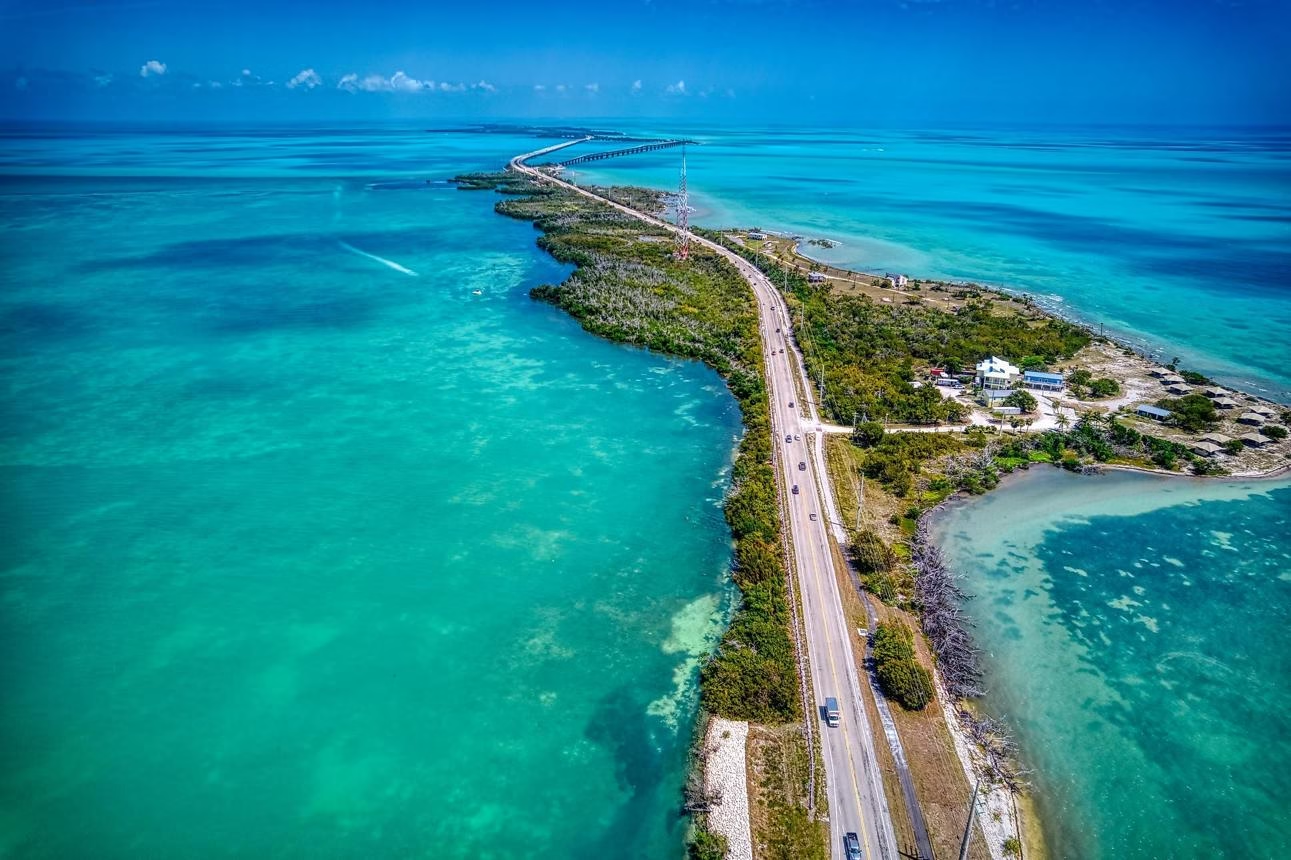
The same logic helps explain the resilience of places like the Florida Keys. Travelers can fly into South Florida and drive, or build a road trip around the Overseas Highway. That matters in an era when travelers are more alert to airfare volatility and are often willing to trade a little exoticism for easier execution.
A useful planning rule is this: the more people in your travel party, the more valuable convenience becomes. A solo traveler may be happy with two connections and a tiny ferry terminal. A family of five traveling with grandparents probably won’t be.
2. Travelers want islands with more than one “best thing”
The old model of island travel often revolved around a single promise: beach relaxation. That still matters, but it is rarely enough on its own, especially when accommodations, dining, and flights can add up quickly.
Smart travelers increasingly look for destinations with layers. They want an island where there is a good beach day available, but also enough variety to justify the overall spend. In practice, that usually means some combination of:
- Strong local food culture
- Water activities for different skill levels
- Walkable districts or small towns
- Nature beyond the beach, such as rainforests, cliffs, reefs, or wildlife reserves
- Distinctive cultural or historical sites
- Options for both active days and low-effort days
This is one reason Hawaii continues to perform so well as an island dream destination. It offers multiple “trip types” within the same state: surfing and city energy on Oahu, volcanic landscapes on the Big Island, lush dramatic scenery on Kauai, and resort-driven relaxation mixed with road-trip exploration on Maui. It is not cheap, but travelers can justify the cost because they are not buying only a beach.
3. Value now means “worth it,” not just “cheap”
The most important change in travel spending may be that travelers are evaluating value more holistically. They are not necessarily looking for the lowest nightly rate. They are looking for an island trip that feels proportionate to the cost.
That means asking a more useful set of questions before booking:
- Does the hotel or rental save money elsewhere by including breakfast, parking, a kitchen, or beach gear?
- Will I need a rental car every day, or can I stay somewhere walkable?
- Are the best experiences free or low-cost—public beaches, scenic hikes, snorkeling from shore, old town wandering—or is everything an add-on excursion?
- Is shoulder season likely to offer a better balance of price and weather?
- Can I split the trip between two areas instead of paying premium rates in one famous zone?
Bank of America’s 2025 summer travel survey found that more than 70% of respondents still planned to vacation, but spending patterns suggested more selective behavior around airfare and lodging. Deloitte’s 2026 travel survey similarly points to travelers being slower to fully commit bookings, especially in middle-to-upper-middle income bands that may feel the squeeze between travel ambitions and real-world budgets.
In other words, people still want the island trip. They just want it to pencil out.

How “smart value” works in real island planning
A family comparing Maui and Puerto Rico may decide that Puerto Rico wins not because it is universally “better,” but because nonstop flight options, no passport requirements, and lower day-to-day dining costs make the total trip easier to justify. A couple considering Key West versus a Caribbean all-inclusive may choose Key West because they can turn it into a multi-stop Florida trip with flexible lodging options and fewer international logistics. A retiree planning a fall getaway may skip peak summer on Nantucket and go in September when weather can still be good but crowds have thinned.
That is what value looks like now: fit, not just price.
4. Crowds, timing, and climate resilience are part of the decision
Island travel has always been seasonal, but climate risk and crowd management now play a much larger role in planning than they did a decade ago. Travelers are more aware of hurricane season, heat stress, coral reef vulnerability, wildfire impacts, water restrictions, and the fact that peak-season beauty can come with peak-season congestion.
That doesn’t mean islands are becoming less appealing. It means travelers are becoming more strategic.
Smart timing strategies for island vacations
- Choose shoulder season when possible. Late spring and early fall often offer a better balance of pricing, weather, and crowd levels than absolute peak periods.
- Study weather by month, not by brand reputation. “Tropical” does not mean the same thing in Puerto Rico, the U.S. Virgin Islands, Hawaii, or the Florida Keys.
- Build one weather-proof day into the itinerary. Museums, food tours, spa time, or a flexible town day can save a trip if ocean conditions shift.
- Prioritize refundable or change-friendly bookings during storm-prone periods.
- Check reef, beach, and trail conditions before you go. Island environments can change quickly after storms or high surf.
This matters because island vacations are often expensive enough that a poorly timed trip can feel disproportionately disappointing. Travelers who choose islands thoughtfully—by month, micro-region, and trip purpose—usually have a better experience than travelers who book around a generic “summer beach vacation” idea.
5. People increasingly want islands that feel restorative, not performative
One of the clearest shifts in leisure travel is that travelers are becoming less interested in vacations that look good online but feel stressful in real life. Islands are well positioned to benefit from that shift—if they deliver substance.
A restorative island trip usually has a few characteristics:
- Lodging that reduces friction rather than adding it
- At least one easy daily ritual, such as morning coffee walks, beach access, or a sunset spot
- A realistic mix of activity and rest
- Good food without requiring constant reservations or long drives
- Enough local texture to feel memorable, but not so much complexity that every day becomes logistical work
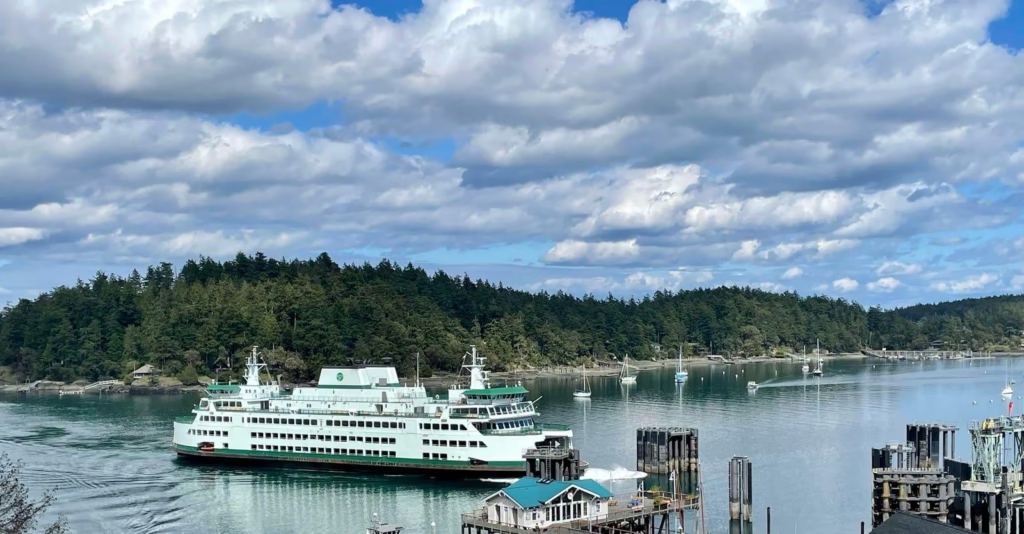
That is why quieter island formats are gaining attention alongside marquee destinations. Not every traveler wants Waikiki or peak-season Key West. Some want Bainbridge Island with Seattle access, Block Island after Labor Day, San Juan Island for whale watching and biking, or a low-key stretch of the Florida Keys where the emphasis is paddling, fishing, and reef time rather than nightlife.
AP reporting on current U.S. travel patterns also points to Americans traveling closer to home and choosing more budget-conscious domestic trips, particularly when gas prices, airfare, and inflation affect planning. That trend naturally favors drivable or lower-friction island destinations.
Which kinds of islands are matching U.S. traveler priorities best?
The answer depends on what the traveler actually values. But broadly, today’s island demand tends to cluster around a few destination types.
The best fit for families: islands with simple logistics and mixed activity levels
Families often do best on islands where one day can include both low-effort beach time and an optional structured activity. Puerto Rico, Oahu, and parts of the Florida Keys fit this well because they offer beaches, casual dining, wildlife or snorkeling options, and lodging choices across several price points. The ability to mix “big day” activities with slower days is crucial when children, teens, or grandparents are involved.
The best fit for couples: islands with atmosphere plus flexibility
Couples often want a destination that feels scenic and intimate without requiring a rigid luxury budget. That might mean Kauai for hiking and dramatic landscapes, Key West for walkable evenings and architecture, or Martha’s Vineyard in shoulder season for biking, seafood, and a slower coastal rhythm.
The best fit for active travelers: islands where water is only part of the appeal
For travelers who get restless after two beach days, islands with interior landscapes tend to outperform. Hawaii is the obvious example, but Puerto Rico also works well because a single trip can include old San Juan, El Yunque, offshore cays, and food-focused evenings.
The best fit for “I need a break” travelers: islands with low-friction routines
Sometimes the right island is simply the one where you can do less. Barrier islands, ferry-access islands near major U.S. metros, and quieter coastal islands often win here. The best version of this trip is not lazy planning; it is intentional simplicity.
What to look for before you book an island trip now
Before choosing an island, it helps to move beyond the marketing copy and evaluate the trip like a smart buyer. A few questions can save money and improve the experience dramatically.
Ask these before booking
- How long is the true travel day from my home airport or city?
- Do I need a rental car, or can I stay somewhere walkable?
- What will I actually do for four to six days besides sit on the beach?
- Is the island known for good food, or will every meal be resort-dependent and expensive?
- What does bad weather look like there in the month I’m considering?
- Are there public beaches, trails, and low-cost activities, or is the destination built around paid excursions?
- Does this island fit the people traveling with me, or just the idea I have of an island vacation?
These questions may sound basic, but they separate a satisfying island trip from an overpriced one.
The island trip is changing, not disappearing
If anything, islands are becoming more relevant because they align with what many Americans want from travel now: a clearer sense of place, stronger visual payoff, and a better chance of actually disconnecting. But the way people choose islands is getting more sophisticated. They are comparing total cost, travel friction, weather risk, crowd levels, and whether the destination offers enough substance to feel worthwhile beyond the photos.
That is probably healthy for the category. Islands do not need to be sold as fantasy to remain appealing. Their real strengths—water access, compact adventure, local character, and the emotional reset that comes from being surrounded by sea—are still compelling. Travelers are simply getting better at asking which islands match the trip they truly want to have.
Where the smartest island trips are won
The best island vacation in 2026 is rarely the one with the most dramatic marketing. It is the one that matches the traveler’s real constraints and real goals. Sometimes that means booking Hawaii because it delivers enough depth to justify the cost. Sometimes it means choosing Puerto Rico because it offers warmth, beaches, culture, and easier logistics. Sometimes it means skipping the obvious tropical splurge and taking a shoulder-season trip to a U.S. island that offers calm, walkability, and room to breathe.
The enduring appeal of islands has not changed. What has changed is the traveler. Americans are still drawn to the idea of crossing water toward somewhere distinct. They are just doing it with sharper questions, tighter planning, and a stronger sense of what makes a trip genuinely worth taking.
FAQ: What Americans are asking about island vacations now
1) Why are island vacations still so popular with U.S. travelers?
Because islands combine scenery, water access, and a stronger sense of escape than many mainland destinations. They also work across multiple trip styles, from family beach vacations to hiking-focused getaways and low-key restorative breaks.
2) What are the best U.S.-friendly island destinations if I want easy logistics?
Puerto Rico, the Florida Keys, Oahu, Catalina Island, San Juan Island, Martha’s Vineyard, and some Gulf Coast or Southeast barrier islands are often easier to plan than far-flung international islands.
3) Is Puerto Rico a good island option for Americans who do not want international travel complexity?
Yes. U.S. citizens do not need a passport, and Puerto Rico offers beaches, rainforest access, historic districts, and offshore island excursions with less friction than many international destinations.
4) How far in advance should I book an island vacation?
For Hawaii or peak summer travel, several months ahead is wise. For shoulder-season domestic islands, you may have more flexibility. Flights, ferry schedules, and limited hotel inventory matter more on islands than in large mainland cities.
5) Are island vacations always expensive?
No. They can be expensive, but not all islands are luxury destinations. Costs vary dramatically based on airfare, season, lodging type, dining habits, and whether the island offers free or low-cost activities such as beaches, hiking, snorkeling from shore, or historic walking areas.
6) What is the best time of year to visit an island?
It depends on the island. Shoulder seasons often offer the best balance of weather, pricing, and crowd levels, but you need to check each destination’s climate pattern carefully, especially in hurricane-prone regions.
7) What should families look for in an island destination?
Easy airport access, swimmable beaches, flexible lodging, grocery access, a mix of low-effort and active things to do, and enough dining variety that every meal does not become a project.
8) Are islands still a good option if I do not want to spend all day at the beach?
Absolutely. Many islands offer hiking, food culture, wildlife viewing, snorkeling, historic districts, kayaking, museums, fishing, and scenic drives. Hawaii and Puerto Rico are especially strong for travelers who want more than beach time.
9) How can I avoid overpaying for an island trip?
Travel in shoulder season, compare total trip cost rather than room rate alone, look for walkable lodging, use grocery-friendly accommodations when possible, and choose islands with plenty of public-access beaches and low-cost activities.
10) What makes an island trip feel “worth it” now?
For many travelers, it is the combination of ease, beauty, and variety. A worthwhile island trip feels memorable without being exhausting, expensive in ways that are visible and justifiable, and flexible enough to match the pace of the people taking it.





Leave a Reply