

From tropical retreats and historic communities to thriving cultural centers, islands have long occupied a special place in the American imagination. Their unique geography creates opportunities for recreation, preservation, innovation, and identity. As travel preferences evolve and remote work expands, islands continue to attract visitors and residents seeking distinctive experiences, rich heritage, natural beauty, and a stronger connection to place.
Why Islands Hold a Unique Place in American Culture
For generations, islands have represented something larger than geography. They symbolize escape, exploration, independence, and discovery. Whether Americans are dreaming about a weekend getaway, planning a retirement destination, or exploring local history, islands often appear as places where everyday routines give way to something different.
Part of this appeal comes from physical separation. Water naturally creates boundaries that distinguish island life from mainland experiences. Even islands connected by bridges or ferries often maintain unique traditions, architecture, food cultures, and social rhythms.
The fascination spans every region of the country. From the rugged islands of New England to the subtropical destinations of the Pacific and Caribbean, Americans continue to view islands as places where culture and nature intersect in memorable ways.
Today, that fascination extends beyond tourism. Many islands are becoming centers of economic activity, environmental innovation, arts communities, and cultural preservation, broadening their appeal far beyond vacation travel.
The Evolution of Islands from Retreats to Year-Round Destinations
Historically, many American islands were viewed primarily as seasonal escapes. Wealthy families built summer homes, travelers sought beaches, and visitors arrived for short-term recreation.
Over time, however, many islands developed more diverse identities.
Several factors contributed to this transformation:
- Improved transportation infrastructure
- Expanded digital connectivity
- Growth in remote work opportunities
- Increased interest in heritage tourism
- Rising demand for outdoor recreation
- Investments in local arts and cultural institutions
As a result, islands that were once considered isolated now attract entrepreneurs, artists, researchers, retirees, and digital professionals.
Communities have adapted by developing year-round economies that support residents while preserving the qualities that make island living attractive. This balance between growth and preservation has become a defining challenge and opportunity for many island destinations.

How Island Geography Shapes Distinctive Communities
One reason islands continue to fascinate Americans is their ability to cultivate strong local identities.
Geographic separation often encourages residents to develop close-knit communities. Local traditions, festivals, dialects, culinary practices, and environmental stewardship efforts frequently become central aspects of island culture.
In many cases, island residents share a strong sense of place that is difficult to replicate elsewhere. The surrounding water serves not only as a physical boundary but also as a cultural one.
Visitors often notice characteristics such as:
- Strong community involvement
- Locally owned businesses
- Preservation of historic districts
- Distinctive food traditions
- Greater awareness of environmental issues
- Deep connections to maritime heritage
These qualities create experiences that feel authentic rather than manufactured, which aligns with modern travelers’ growing preference for meaningful experiences over generic attractions.
America’s Most Influential Island Destinations
Across the United States, islands serve different roles while collectively contributing to the nation’s cultural landscape.
Hawaii: A Global Cultural and Tourism Hub
The state of Hawaii remains one of the world’s most recognized island destinations. Beyond its beaches and volcanic landscapes, Hawaii offers a rich blend of Native Hawaiian traditions, Asian influences, and modern American culture.
Its role extends beyond tourism. Hawaii serves as a major center for environmental research, marine science, military operations, and cultural preservation.
Martha’s Vineyard and Nantucket
The islands of Martha’s Vineyard and Nantucket have become synonymous with New England charm. Their preserved architecture, maritime history, and seasonal communities continue to attract visitors seeking a blend of culture and relaxation.
Key West
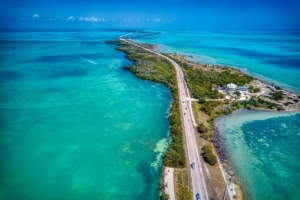
Located at the southern end of the Florida Keys, Key West combines Caribbean influences, literary history, artistic communities, and vibrant tourism. The island demonstrates how cultural identity can become a major economic asset while maintaining historical significance.
Puerto Rico

As a U.S. territory, Puerto Rico offers a compelling example of how island communities contribute to broader American identity. Its blend of Spanish, African, Indigenous, and American influences creates one of the most culturally rich destinations in the United States.
Why Travelers Are Seeking Island Experiences More Than Ever
The modern travel landscape has shifted significantly in recent years.
Many travelers increasingly prioritize experiences that offer:
- Natural beauty
- Slower pace
- Outdoor activities
- Cultural authenticity
- Local food experiences
- Historical exploration
Islands naturally provide many of these qualities.
Research from major tourism organizations consistently shows that experiential travel continues to grow as consumers seek memorable and meaningful journeys. Rather than focusing solely on attractions, travelers increasingly value destinations that allow them to engage with local communities and environments.
Island destinations often excel in this area because their geographic boundaries help preserve unique cultural characteristics.
For example, visitors may spend the morning exploring a historic fishing village, the afternoon kayaking through protected coastal ecosystems, and the evening attending a local cultural event—all within a relatively compact area.
The Growing Role of Islands in Environmental Stewardship
Islands frequently serve as laboratories for environmental innovation.
Because island communities often experience environmental changes first, they have become important centers for sustainability initiatives.
Common areas of focus include:
- Renewable energy development
- Coastal conservation
- Marine ecosystem protection
- Sustainable tourism practices
- Water resource management
- Climate adaptation planning
Many island communities recognize that preserving natural resources is essential not only for environmental reasons but also for long-term economic stability.
This has led to partnerships among governments, researchers, nonprofits, and local residents to develop practical solutions that can sometimes be applied in mainland regions as well.
For travelers, these efforts provide opportunities to participate in responsible tourism while learning about environmental challenges and solutions.
How Remote Work Is Reshaping Island Life
One of the most significant developments of the past decade has been the rise of remote work.
As more professionals gain flexibility regarding where they live, islands have emerged as attractive alternatives to traditional urban environments.
Many remote workers are drawn by:
- Scenic surroundings
- Outdoor recreation opportunities
- Strong community connections
- Reduced commuting demands
- Improved work-life balance
However, the trend has also created challenges.
Increased demand for housing can affect affordability for local residents. Infrastructure improvements may be necessary to support growing populations. Community leaders must balance economic opportunity with cultural preservation.
The most successful island destinations are those that manage growth thoughtfully while maintaining the characteristics that make them unique.

The Economic Importance of Island Communities
Islands contribute significantly to local, regional, and national economies.
Tourism remains an important driver, but many island economies have diversified considerably.
Today, island communities often support industries such as:
- Marine research
- Higher education
- Renewable energy
- Healthcare
- Fishing and aquaculture
- Creative arts
- Technology services
- Hospitality
This diversification helps create resilience against economic fluctuations while supporting year-round employment.
The growth of cultural tourism has been particularly important. Visitors increasingly seek educational experiences that connect them with local history, traditions, and communities.
As a result, museums, heritage sites, festivals, and cultural centers play a larger role in island economies than ever before.
What Makes Island Culture So Enduring?
Island cultures often develop distinct identities because of their relative isolation and strong community networks.
Over generations, traditions become deeply embedded in everyday life.
Examples include:
- Maritime festivals
- Regional music traditions
- Local storytelling practices
- Unique culinary techniques
- Historic preservation efforts
- Community-led environmental programs
These cultural assets help islands remain relevant even as tourism trends change.
Visitors are often attracted not simply by landscapes but by opportunities to experience ways of life that have evolved over centuries.
This combination of continuity and adaptation helps explain why islands continue to capture public interest across generations.
Frequently Asked Questions
Why are islands so popular among American travelers?
Islands offer a combination of natural beauty, cultural uniqueness, outdoor recreation, and a sense of escape that many travelers find appealing.
Are islands only attractive for vacations?
No. Many islands support thriving year-round communities, businesses, educational institutions, and cultural organizations.
What makes island communities different from mainland communities?
Geographic separation often fosters stronger local identities, close-knit social networks, and distinctive cultural traditions.
How has remote work affected island destinations?
Remote work has increased interest in island living by allowing professionals greater flexibility in choosing where they reside.
Are islands important for environmental research?
Yes. Many islands serve as important locations for studying marine ecosystems, climate adaptation, renewable energy, and conservation practices.
Which U.S. islands attract the most visitors?
Hawaii, Puerto Rico, the Florida Keys, Martha’s Vineyard, and Nantucket are among the most recognized island destinations.
What is cultural tourism on islands?
Cultural tourism involves exploring local history, traditions, food, art, music, and community experiences rather than focusing solely on recreation.
Do island economies rely only on tourism?
No. Many island communities support diverse industries including education, research, healthcare, fishing, renewable energy, and technology.
Why do islands often have strong local traditions?
Geographic isolation can help preserve customs, cultural practices, and community values across generations.
Are islands becoming more important in modern America?
Yes. Islands increasingly serve as centers of culture, sustainability, tourism, innovation, and community development.





Leave a Reply