

Luxury credit cards have evolved far beyond points, miles, and airport lounge access. In 2026, affluent consumers increasingly prioritize personalized experiences, premium service, digital convenience, travel flexibility, security, and lifestyle integration. While rewards still matter, cardholders are placing greater value on benefits that save time, simplify complex travel plans, provide exclusive access, and deliver meaningful everyday utility. Understanding these shifting expectations reveals how luxury cards are adapting to a new generation of high-net-worth and high-spending consumers.
The Changing Definition of a Luxury Card
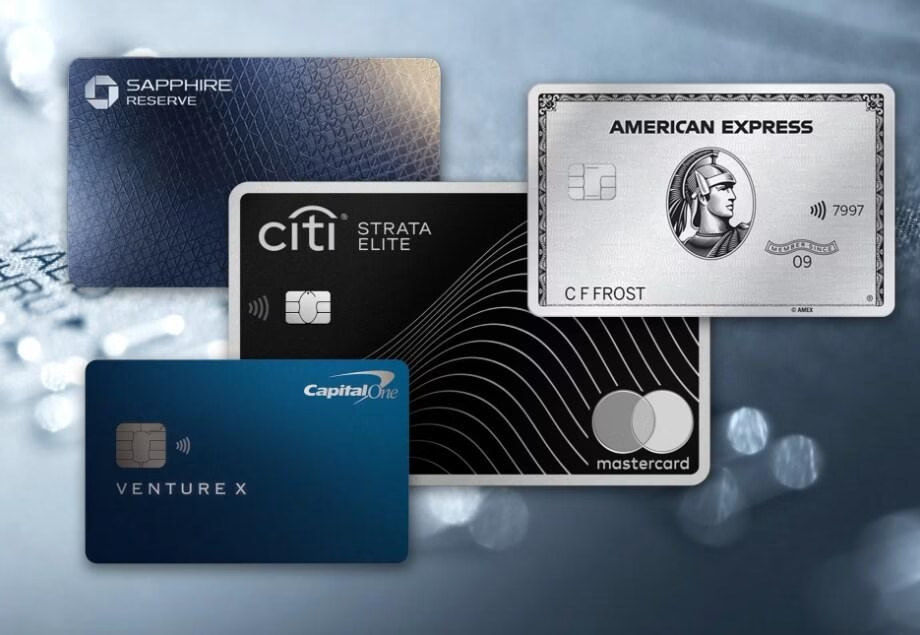
For years, luxury credit cards were primarily marketed around prestige, elite status, and generous rewards programs. Premium metal cards, invitation-only products, and exclusive memberships helped create an image of financial sophistication. However, the luxury card market in 2026 looks considerably different from what it did even a decade ago.
Today’s affluent consumers have become more selective. Many already possess access to premium travel programs, luxury hotels, and exclusive experiences through multiple channels. As a result, simply offering elevated rewards rates is no longer enough to justify annual fees that often range from several hundred to well over one thousand dollars.
Instead, consumers increasingly evaluate luxury cards based on practical value. They want benefits that improve everyday life rather than perks they might use only occasionally.
The shift reflects broader changes in consumer behavior. High-income Americans are spending more on experiences, convenience, wellness, and personalized services. Luxury card issuers have responded by expanding benefits beyond traditional travel rewards.

Why Rewards Alone Are No Longer the Main Attraction
Rewards remain important, but many luxury cardholders have discovered a common reality: accumulating points is easy, maximizing their value is not.
Consumers frequently encounter:
- Limited award availability
- Dynamic pricing systems
- Complex redemption rules
- Frequent program changes
- Restricted transfer options
As a result, affluent consumers increasingly view rewards as one component of a broader value proposition rather than the primary reason to keep a premium card.
Consider a frequent traveler who spends $100,000 annually on a luxury card. While earning points remains attractive, that individual may derive more tangible value from priority travel assistance during disruptions, access to premium customer service, or comprehensive travel protection.
Many cardholders are asking a different question than they did ten years ago:
“How does this card improve my life?” rather than “How many points does it earn?”
The Rise of Personalized Experiences
One of the biggest trends shaping luxury cards in 2026 is personalization.
Affluent consumers increasingly expect services tailored to their individual preferences. Generic benefits are becoming less appealing compared to customized experiences.
Luxury card providers are investing heavily in:
- AI-powered travel recommendations
- Personalized dining reservations
- Curated event invitations
- Customized shopping experiences
- Individualized concierge support
For example, a cardholder who frequently travels to New York, Los Angeles, and Miami may receive targeted hospitality offers, preferred hotel upgrades, and restaurant recommendations aligned with previous spending habits.
This level of personalization mirrors broader trends seen across luxury retail, hospitality, and financial services.
Consumers increasingly expect their financial products to understand their lifestyles rather than simply process transactions.
Concierge Services Are Becoming More Valuable Again
There was a period when concierge services appeared less relevant as online booking platforms became widespread. Yet luxury card providers are seeing renewed interest in premium assistance services.
The reason is simple: time has become one of the most valuable assets for affluent consumers.
Busy professionals, entrepreneurs, executives, and frequent travelers often place enormous value on having someone solve complex problems quickly.
Modern luxury card concierge services may assist with:
- Last-minute restaurant reservations
- International travel arrangements
- Event ticket sourcing
- Luxury transportation coordination
- Emergency travel support
- Special occasion planning
Imagine a business traveler whose international flight is canceled during a major weather disruption. A dedicated concierge team capable of rebooking flights, securing hotel accommodations, and arranging ground transportation can provide far more value than additional reward points.
For many consumers, convenience has become the ultimate luxury.
Travel Benefits Are Shifting Toward Flexibility
Travel remains a cornerstone of luxury card programs, but expectations have evolved.
In previous years, cardholders often focused on airport lounges and airline partnerships. While those benefits remain popular, flexibility is becoming increasingly important.
Today’s travelers want protection against uncertainty.
They value:
- Comprehensive trip cancellation coverage
- Emergency medical assistance
- Travel delay reimbursement
- Flexible booking options
- Lost luggage protection
- Real-time travel support
The post-pandemic travel environment taught many consumers the importance of adaptability. Premium cardholders now pay closer attention to travel protections than they once did.
A card that can save thousands of dollars during an unexpected disruption may ultimately deliver greater value than one offering marginally higher reward rates.
Digital Convenience Has Become a Luxury Feature
Luxury no longer means complexity.
In fact, modern affluent consumers often associate luxury with simplicity.
Premium cardholders increasingly expect seamless digital experiences that allow them to manage finances, travel, rewards, and benefits through intuitive platforms.
Features gaining importance include:
- Real-time spending alerts
- Instant virtual cards
- Digital wallet integration
- Advanced fraud monitoring
- AI-powered financial insights
- Automated expense categorization
Business owners, executives, and high-net-worth individuals often manage multiple financial accounts. They increasingly favor card providers that reduce friction and simplify financial management.
A smooth digital experience can influence satisfaction just as much as exclusive travel perks.
Security and Privacy Are Major Priorities
As digital transactions continue to expand, affluent consumers are becoming increasingly focused on security.
High-income households often face elevated risks related to fraud, identity theft, and cybercrime.
Consequently, luxury cardholders are paying closer attention to:
- Advanced fraud detection
- Purchase protection
- Identity monitoring
- Data privacy safeguards
- Secure authentication systems
- Zero-liability protections
Premium card issuers are investing heavily in sophisticated security technologies designed to detect unusual spending patterns and prevent unauthorized transactions.
For many cardholders, peace of mind has become one of the most valuable premium benefits available.
Lifestyle Benefits Are Expanding Beyond Travel
Travel once dominated luxury card marketing. In 2026, lifestyle benefits have become equally important.
Consumers increasingly seek value in areas they engage with every week rather than just during vacations.
Popular lifestyle categories include:
- Wellness memberships
- Fitness programs
- Luxury dining access
- Entertainment subscriptions
- Personal development services
- Premium retail partnerships
For example, a cardholder who travels only a few times per year may derive greater ongoing value from wellness credits, dining privileges, or exclusive local experiences.
This shift reflects changing consumer priorities. Many affluent Americans are investing more heavily in health, wellness, and quality-of-life experiences than previous generations.
Younger Affluent Consumers Are Reshaping the Market
Millennial and Gen Z high earners are influencing luxury card design in meaningful ways.
Unlike previous generations, younger affluent consumers often place less emphasis on visible status symbols and more emphasis on functionality, flexibility, and experiences.
They tend to value:
- Sustainable business practices
- Digital-first experiences
- Subscription benefits
- Flexible travel options
- Unique experiences
- Personalized services
This demographic is also more likely to compare benefits across multiple cards rather than maintain loyalty to a single provider.
As a result, card issuers must continuously innovate to remain competitive.
The luxury card market has become increasingly experience-driven rather than prestige-driven.
What Questions Should Consumers Ask Before Choosing a Luxury Card?
Many consumers focus heavily on welcome bonuses and reward rates when evaluating premium cards. While important, these factors represent only part of the equation.
Before selecting a luxury card, consider asking:
- Which benefits will I realistically use?
- How often do I travel?
- Do I value service and convenience?
- Are the lifestyle credits relevant to me?
- What protections are included?
- How strong is the mobile app experience?
- Is customer service available 24/7?
- Does the annual fee align with my usage?
A luxury card should fit naturally into an individual’s lifestyle rather than require behavioral changes to justify its value.
The most successful cardholders tend to select products that complement existing spending habits.
The Future of Premium Card Membership
Looking ahead, luxury cards are likely to become even more integrated into consumers’ broader lifestyles.
Several emerging trends may shape the next phase of premium card evolution:
- Greater AI-driven personalization
- Enhanced digital concierge capabilities
- Expanded wellness partnerships
- More flexible rewards ecosystems
- Stronger sustainability initiatives
- Increased focus on financial wellness
Rather than functioning solely as payment tools, luxury cards are evolving into comprehensive lifestyle platforms.
The most competitive products will likely be those that deliver value across multiple aspects of daily life, including travel, dining, wellness, security, and financial management.
Consumers increasingly expect premium experiences to be seamless, personalized, and immediately useful.
Frequently Asked Questions
1. Are luxury credit cards still worth their high annual fees?
They can be worthwhile if the benefits align with your lifestyle and spending habits. Frequent travelers and high spenders often extract significant value from premium services and protections.
2. What is the biggest trend in luxury cards in 2026?
Personalization is among the most significant trends, with issuers focusing on tailored experiences and customized benefits.
3. Do affluent consumers care less about rewards today?
Rewards remain important, but many consumers now place equal or greater value on convenience, service quality, flexibility, and exclusive experiences.
4. Are concierge services actually useful?
For busy professionals and frequent travelers, concierge services can save substantial time and provide access to resources that may be difficult to obtain independently.
5. Why are travel protections becoming more important?
Travel disruptions remain common, making insurance and protection benefits increasingly valuable for frequent travelers.
6. What lifestyle benefits are growing in popularity?
Wellness memberships, dining experiences, entertainment access, and premium retail partnerships are seeing increased demand.
7. How important is mobile app quality?
Very important. Many premium cardholders expect seamless digital experiences and advanced account management tools.
8. Do younger consumers view luxury cards differently?
Yes. Younger affluent consumers often prioritize flexibility, experiences, digital convenience, and practical value over status.
9. Is security a major factor in luxury card selection?
Absolutely. Advanced fraud protection and privacy features are increasingly important for high-income consumers.
10. What should consumers evaluate beyond rewards?
Consider customer service, travel protections, lifestyle benefits, digital tools, security features, and overall usability.






Leave a Reply