

More Americans are shifting coastal vacations toward islands because islands often deliver a cleaner separation from daily routines, easier access to beaches and water activities, and a stronger sense of place than many mainland beach towns. Rising interest in shorter domestic trips, nature-focused travel, and flexible lodging has also made islands—from the Florida Keys to Mount Desert Island—feel more practical, not just aspirational.
The Shift Toward Islands Is About More Than Pretty Beaches
For years, the classic U.S. coastal vacation was a familiar formula: book a hotel near the beach, drive to a busy boardwalk or resort strip, and spend a long weekend balancing sun time with restaurant reservations. That model still works for plenty of travelers. But a growing number of Americans are now choosing islands instead, and the reasons go well beyond scenery.
An island getaway changes the rhythm of a trip. The ferry ride, causeway crossing, short flight, or boat transfer creates a psychological boundary between ordinary life and vacation time. That separation matters. Travelers who feel burned out by packed schedules, nonstop notifications, and overplanned itineraries are often looking for places that help them slow down without requiring a complicated international trip. Islands can deliver that shift quickly. They feel distinct, self-contained, and often easier to “settle into” than a sprawling coastal metro area.
This preference also fits broader travel behavior. U.S. travel spending remains heavily driven by domestic trips, with domestic travel accounting for the vast majority of total U.S. travel spending. Industry surveys also suggest that many travelers are still favoring shorter leisure trips, value-conscious planning, and destinations that combine outdoor access with flexible accommodations. In practice, islands often check those boxes: a drivable barrier island in the Carolinas, a New England island reached by ferry, or a longer but still domestic trip to Hawaii can each satisfy a slightly different version of the same demand for a coastal escape that feels immersive rather than generic.
Why Islands Feel Different From a Typical Beach Vacation
The biggest reason islands are gaining attention is simple: they tend to offer a more complete environment, not just a shoreline. On many mainland beach trips, the beach is the attraction and the rest of the destination is secondary. On islands, the destination itself often becomes the experience.
That difference shows up in several ways. Islands usually compress a lot of vacation value into a relatively small area. You might spend the morning biking to a lighthouse, the afternoon kayaking in a bay, and the evening eating at a seafood shack or local café without ever getting back in the car for a long drive. The geography encourages a more contained, lower-friction trip.
There is also a stronger sense of identity on many islands. Nantucket does not feel like the Florida Keys. The San Juan Islands do not feel like Hilton Head. Oahu does not feel like Mount Desert Island. Architecture, food, local transportation, outdoor activities, weather patterns, and even the pace of conversation can differ dramatically from one island destination to the next. For travelers who are tired of interchangeable resort corridors, that distinctiveness matters.
Another factor is visibility. Social media has made travelers more aware of domestic island options that once felt niche or regional. At the same time, booking platforms have made it easier to compare ferry schedules, rental homes, small inns, eco-lodges, and family-friendly condos in one place. The result is that island travel no longer feels like a complicated specialty trip. For many households, it now feels as bookable as any other beach vacation.
The Practical Reasons U.S. Travelers Are Choosing Islands Now
The rise of island getaways is partly emotional, but it is also highly practical. American travelers are making decisions around time, budget, flexibility, and crowd tolerance. Islands increasingly fit those priorities.
1) Islands make shorter trips feel more substantial
A three- or four-night stay on an island often feels like a bigger reset than the same number of nights in a mainland beach town. The journey onto the island creates a beginning and end to the trip, which makes a quick escape feel more intentional. For busy families, remote workers, and couples trying to maximize limited PTO, that matters.
Deloitte’s recent summer travel research found that travelers have shown continued interest in shorter leisure trips, even amid affordability concerns. That trend aligns well with domestic island travel. You do not need two weeks off to enjoy Amelia Island, Block Island, Catalina Island, or the Florida Keys. A long weekend can be enough.
2) Domestic islands can feel adventurous without the logistics of international travel
Many Americans still want a trip that feels meaningfully different from home, but not everyone wants passport logistics, customs lines, currency issues, or a long-haul flight. Islands provide a middle ground. They offer water, wildlife, boating, coastal trails, seafood culture, and often a more relaxed atmosphere, but within a domestic travel framework.
This is one reason destinations such as the Florida Keys, Maui, Oahu, Mount Desert Island, Martha’s Vineyard, San Juan Island, and South Padre Island continue to attract very different kinds of travelers. Each offers a version of “coastal escape” without requiring the planning burden of an overseas island vacation.
3) Flexible lodging works especially well on islands
Vacation rentals, condo hotels, cottage stays, and small inns are central to island travel. That matters because travelers are increasingly looking for kitchens, laundry, outdoor space, and room for multi-generational groups or friend trips. A family with two kids may prefer a two-bedroom rental near a calm beach and a grocery store rather than two hotel rooms in a busy resort zone.
That flexibility is especially valuable on islands where the destination encourages longer beach days, self-catered breakfasts, and slower evenings. Travelers can build a more comfortable rhythm around the place rather than around hotel infrastructure.
4) Nature is part of the core experience, not an add-on
Mainland beach trips often revolve around the beach plus shopping and dining. Island trips often widen the menu. Travelers can add tidepooling, paddleboarding, birding, shelling, snorkeling, biking, reef tours, whale watching, forest trails, state parks, and boat excursions without feeling like they are “leaving the destination” to do so.
For many Americans, that variety matters more than nightlife. A family choosing between a crowded beach strip and an island with protected dunes, bike paths, and kayak launches may decide the island offers more actual vacation time and less logistical friction.
What Kinds of U.S. Islands Are Driving the Trend?
Not every island getaway serves the same traveler. Part of the growth in island travel comes from the fact that there are several distinct island categories within the U.S. market, each solving a different travel need.
Warm-Weather Islands for Easy Sun-and-Water Trips
For travelers who want reliable beach weather, boating, and a casual coastal atmosphere, warm-weather islands remain the most obvious entry point.
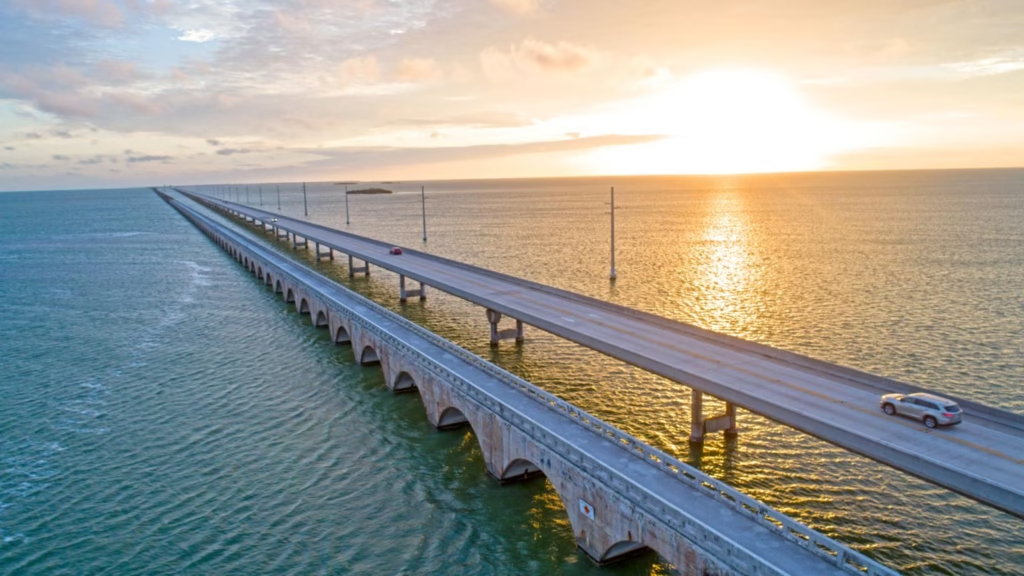
The Florida Keys are a strong example because they offer multiple versions of an island trip in one chain. Key Largo appeals to divers and snorkelers who want reef access and a shorter drive from South Florida. Islamorada leans toward fishing, laid-back luxury, and water sports. Key West draws travelers who want history, nightlife, walkability, and a destination that feels culturally distinct from much of the mainland.
Hawaii sits in a category of its own because it is both a U.S. island destination and a long-haul trip for many mainland travelers. Yet it remains central to the island conversation. Hawaii’s tourism data has shown strong visitor spending and continued interest from U.S. travelers, even as the state and local tourism leaders push for more responsible, community-aware travel patterns. That is an important signal: Americans are still willing to invest in island trips when the destination offers natural beauty, cultural depth, and a sense of occasion that feels difficult to replicate elsewhere.
New England and Mid-Atlantic Islands for a More Layered Coastal Trip
A second major category includes islands where the appeal is less about tropical weather and more about texture: harbors, bike paths, seafood shacks, historic streets, and cooler-weather outdoor recreation.
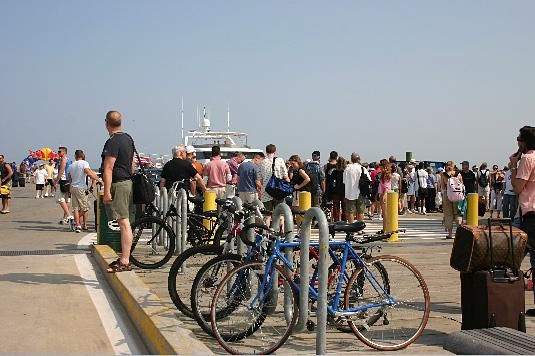
Think of Martha’s Vineyard, Nantucket, Block Island, Mount Desert Island, and parts of coastal Maine. These destinations tend to attract travelers who want a coastal trip with some cultural weight—bookstores, old inns, maritime history, local farm stands, and long walks rather than all-day pool time.
For many travelers, these islands feel especially attractive because they offer an experience that is beach-adjacent rather than beach-exclusive. You can spend the day on the water and still build a trip around hiking, art, local food, and small-town exploration. That makes them a strong choice for couples, friend groups, and families with mixed interests.
Pacific Northwest and West Coast Islands for Quiet, Scenic Escapes
Then there are the islands that appeal to travelers who want coastlines without the traditional beach-vacation feel. The San Juan Islands in Washington, for example, attract people who care more about whale watching, kayaking, biking, and farm-to-table dining than about tanning. Catalina Island off Southern California offers a different mix of boating, hiking, and small-town waterfront energy. These destinations are often chosen by travelers who want scenery, nature, and a slower pace, but who are less focused on hot-weather beach culture.
This category matters because it expands the definition of an island getaway. For U.S. travelers, island travel is no longer synonymous with palm trees and resorts. It can also mean evergreen forests, rocky shorelines, cool evenings, and ferry-centered travel.
What Travelers Are Actually Looking For in an Island Escape
When Americans search for island trips, they are often asking practical questions rather than romantic ones. They want to know which islands are easy to reach, whether they need a car, how crowded it gets in summer, whether it works with kids, and how expensive food and lodging will be once they arrive.
That search behavior points to a deeper shift: travelers are less interested in the idea of an island and more interested in whether a specific island fits their travel style.
Here are the factors that tend to shape the decision most:
- Ease of access: Can you drive there, take a short ferry, or reach it on a direct flight?
- Trip length: Is it worth doing for a long weekend, or does it require a full week?
- Transportation on-island: Will you need a rental car, golf cart, bikes, or none of the above?
- Beach quality versus activity mix: Is this mainly a beach destination, or does it offer hiking, boating, and town exploration too?
- Lodging style: Are there family rentals, budget inns, luxury resorts, or mostly high-end inventory?
- Seasonality: Does the island shine in summer only, or is shoulder season a smarter choice?
- Crowd profile: Is it family-heavy, couple-oriented, nightlife-focused, or quieter and nature-driven?
A family from Atlanta looking at Amelia Island may care about drivable access, calm surf, and condo rentals. A couple from Chicago comparing Nantucket and San Juan Island may care more about food, walkability, and shoulder-season weather. A multigenerational group considering Maui may be thinking about direct flights, resort amenities, and whether grandparents and kids can both enjoy the same itinerary.
How to Choose the Right Island Instead of Just the Most Famous One
One of the biggest mistakes travelers make is choosing an island based on name recognition alone. The better approach is to match the island to the actual purpose of the trip.
If the goal is a low-stress family beach week, prioritize islands with easy grocery access, gentle water, and a range of rental options. Parts of the Gulf Coast, barrier islands in the Southeast, and some Florida island destinations may fit better than a car-light New England island with high lodging prices and limited restaurant capacity.
If the goal is a romantic long weekend, look for islands where the setting does more of the work for you: walkable towns, scenic inns, sunset dining, and activities that do not require much planning. Nantucket, Block Island, Catalina, and Key West all fit that mold in different ways.
If the goal is outdoor recreation, focus on islands with a clear activity ecosystem rather than just beach access. Mount Desert Island, the San Juan Islands, Hawaii Island, and Kauai each attract travelers who want to hike, paddle, bike, or snorkel as much as they want to relax.
If the goal is a restorative break from routine, it is worth asking a less glamorous question: how many decisions will this trip require once you arrive? Some islands are beautiful but logistically demanding. Others are easy to settle into because the beach, rental, market, and dinner options are all close together.

The Cost Question: Are Island Getaways More Expensive?
Sometimes yes, but not always in the way travelers expect.
Island travel can be expensive when supply is limited, ferry schedules constrain arrival patterns, or luxury demand pushes rates up. Nantucket, parts of Hawaii, and some peak-season islands in the Northeast can be costly. Food and groceries may also be pricier because shipping and logistics are harder than on the mainland.
But there are several reasons island travel is not automatically a splurge category. First, many U.S. islands are drivable or reachable without a major airfare bill. Second, rental properties can reduce dining costs, especially for families. Third, the nature of island travel often lowers incidental spending. If your days revolve around the beach, biking, hiking, and simple meals, you may spend less than you would in a city-coastal destination built around attractions, valet parking, and restaurant reservations.
The more useful budgeting question is not “Are islands expensive?” It is “Which kind of island trip am I planning?” A three-night shoulder-season stay on a drivable island with a rental kitchen can cost less than a summer hotel stay in a major beach city. A week in Maui at a full-service resort is a different equation entirely.
The Sustainability Factor Is Becoming Part of the Decision
Another reason island travel is evolving is that travelers are becoming more aware of how fragile many island destinations are. Water systems, waste management, reefs, wildlife habitats, local housing supply, and small-road infrastructure can all be affected by tourism volume.
That does not mean travelers should avoid islands. It means they should choose and behave more carefully. Hawaii’s tourism messaging has increasingly emphasized respectful, community-aware travel rather than simple visitor growth. That shift reflects a broader reality across island destinations: the best island trip is one that leaves the place in good shape for residents and future visitors.
For travelers, that can translate into simple decisions:
- visiting in shoulder season when appropriate
- respecting reef-safe sunscreen rules and beach access guidance
- booking locally owned guides or businesses when possible
- following trail and wildlife protections
- understanding that “small destination” often means limited infrastructure, not poor planning
In other words, part of the modern appeal of island travel is not just escape. It is a chance to travel more deliberately.
Why This Trend Is Likely to Continue
Island getaways fit several durable travel priorities at once: domestic accessibility, scenic value, flexible trip length, outdoor recreation, and a stronger sense of separation from everyday life. That combination is hard for many mainland coastal destinations to match consistently.
They also work across life stages. Young couples can use them for long weekends. Families can use them for summer trips. Retirees can use them for slower shoulder-season travel. Remote workers can use them for extended stays that mix work hours with early-morning swims or late-afternoon walks.
Most importantly, islands answer a question many U.S. travelers are asking right now, whether they say it directly or not: How do I take a coastal trip that actually feels different from the rest of my year? For a growing number of people, the answer is not a bigger resort or a farther flight. It is an island that makes the coast feel personal again.
Where the Coast Starts to Feel Like a Break Again
The growing appeal of island travel is not really about chasing novelty. It is about finding a coastal trip with a clearer identity, a slower pace, and a better fit for how Americans actually travel now. Islands offer that rare mix of emotional escape and practical usability. They can be simple, scenic, active, restorative, family-friendly, or quietly luxurious—but the best ones never feel interchangeable.
What This Means for Your Next Trip Search
- Island vacations are growing in appeal because they combine scenery with a stronger sense of separation from daily life.
- Many U.S. islands work well for shorter domestic trips, not just weeklong vacations.
- The best island choice depends on the trip goal: family beach time, romance, outdoor recreation, or true downtime.
- Warm-weather, New England, and Pacific Northwest islands all serve different travel styles.
- Island trips are not automatically more expensive, but logistics and seasonality matter.
- Travelers are increasingly weighing crowd levels, flexible lodging, and local character over generic resort amenities.
- Sustainable, community-aware travel is becoming a more important part of island planning.
- A good island trip often feels more immersive because the destination is the experience, not just the beach.





Leave a Reply