
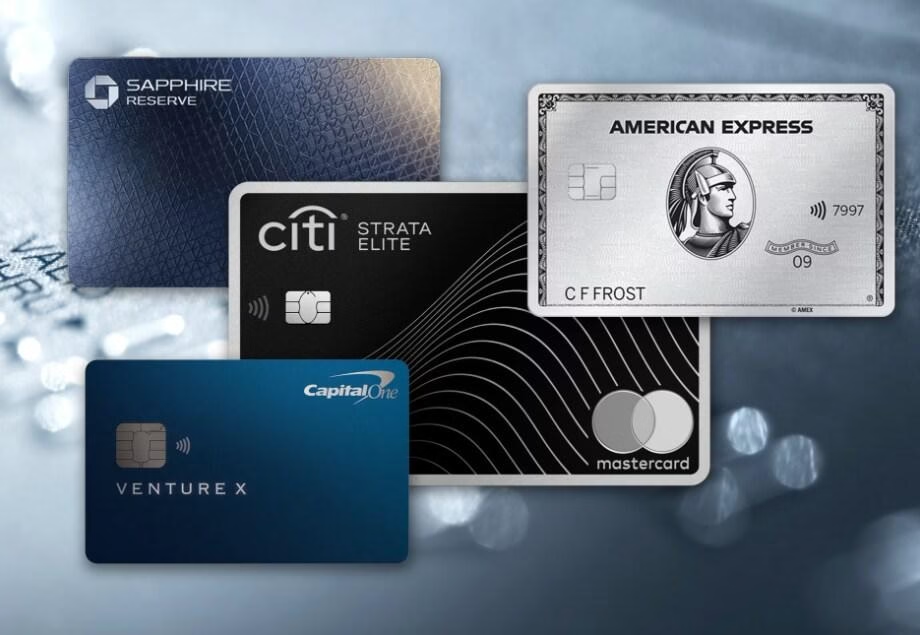
Luxury credit and charge cards have evolved from simple payment tools into modern symbols of financial lifestyle, convenience, and access. While premium cards once signaled exclusivity through high spending requirements alone, today they reflect changing consumer priorities, including travel experiences, personalized services, rewards optimization, and status-driven consumption. Understanding the rise of luxury cards offers valuable insight into broader wealth trends, consumer behavior, and the future of premium spending in America.
Introduction
For decades, luxury payment cards occupied a unique place in American culture. Whether tucked inside a designer wallet or presented during a high-end purchase, these cards represented more than purchasing power. They symbolized financial success, elite access, and a certain level of social standing.
Today, however, the meaning of luxury cards is changing.
Premium cards are no longer reserved exclusively for the ultra-wealthy. High-income professionals, entrepreneurs, frequent travelers, and even younger affluent consumers increasingly seek cards that offer experiences, convenience, and lifestyle benefits. The conversation has shifted from simply asking, “How much can you spend?” to “What access does this card provide?”
As financial institutions compete for affluent customers, luxury cards have become valuable indicators of broader economic and cultural shifts. Their popularity reveals how Americans view wealth, status, travel, and personal finance in a rapidly changing marketplace.
The Evolution of Luxury Cards
Luxury cards first gained attention because they appeared inaccessible.
Historically, premium charge cards were associated with invitation-only memberships, substantial spending requirements, and elite customer service. Ownership itself carried prestige because relatively few people qualified.
Modern luxury cards still maintain an element of exclusivity, but the competitive landscape has expanded significantly. Financial institutions now offer multiple premium products aimed at affluent consumers who may not be ultra-wealthy but possess strong income, excellent credit, and significant annual spending.
Several factors have contributed to this evolution:
- Increased consumer demand for travel benefits
- Growth of reward-based spending strategies
- Expansion of premium airport lounge networks
- Demand for concierge and lifestyle services
- Rising interest in luxury experiences over luxury goods
As a result, luxury cards now function as lifestyle platforms rather than simple payment instruments.
Why Luxury Cards Have Become Modern Status Symbols
Traditional status symbols often centered on visible ownership of expensive products.
Luxury watches, designer handbags, luxury vehicles, and private club memberships historically signaled financial success. While these symbols remain relevant, premium financial products have quietly joined the conversation.
Luxury cards communicate several messages simultaneously:
- Financial stability
- Strong creditworthiness
- Frequent travel habits
- Access to exclusive experiences
- Participation in affluent consumer networks
Unlike many status symbols, premium cards combine symbolic value with practical utility.
For example, an executive who travels weekly may genuinely benefit from airport lounge access, travel protections, and concierge services. The status associated with the card becomes secondary to the lifestyle advantages it delivers.
This blend of utility and prestige helps explain why luxury cards continue attracting consumers despite annual fees that can exceed several hundred dollars.
The Rise of Experience-Based Wealth
One of the most significant trends revealed by luxury cards is the growing preference for experiences over possessions.
Affluent consumers increasingly allocate spending toward:
- Premium travel
- Exclusive events
- Fine dining
- Wellness experiences
- Luxury accommodations
- Cultural experiences
This shift reflects broader consumer behavior trends observed across multiple industries.
Instead of accumulating physical goods, many high-income Americans prioritize memorable experiences that provide personal enrichment and social value.
Luxury card issuers have adapted accordingly. Modern premium card benefits often include:
- Airport lounge memberships
- Hotel elite status
- Dining credits
- Travel statement credits
- Event presale opportunities
- Concierge reservations
These benefits align directly with experience-driven spending patterns.
The card itself becomes less important than the doors it opens.
What Premium Spending Habits Reveal About Affluent Consumers
Examining how luxury cardholders spend provides useful insight into broader economic behavior.
Affluent consumers often demonstrate spending patterns that differ significantly from average households.
Common categories include:
Travel
Travel remains one of the largest spending categories among luxury card users.
Premium travelers often prioritize:
- International trips
- Premium cabin airfare
- Luxury hotels
- Personalized travel experiences
These purchases generate significant rewards while enhancing convenience and comfort.
Dining
Fine dining continues to play an important role in premium spending.
Many luxury cards offer elevated rewards on restaurant purchases because affluent consumers consistently spend more on dining experiences than average households.
Business Expenses
Entrepreneurs and executives frequently use luxury cards to manage business-related expenditures.
These may include:
- Client entertainment
- Travel expenses
- Advertising costs
- Professional services
In many cases, premium rewards structures help offset annual fees through business spending alone.
Lifestyle Services
Luxury card spending increasingly reflects convenience-driven purchasing.
Consumers often prioritize:
- Ride-share services
- Food delivery
- Subscription services
- Wellness memberships
- Premium retail experiences
These patterns reveal a growing preference for time-saving solutions rather than purely material acquisitions.
The Psychology Behind Premium Card Ownership
The appeal of luxury cards extends beyond economics.
Behavioral finance research consistently shows that consumers derive emotional value from financial products.
Luxury card ownership may satisfy several psychological motivations:
Identity Expression
People often use products to communicate aspects of their identity.
A premium card can represent:
- Professional achievement
- Travel-oriented lifestyle
- Financial responsibility
- Personal success
Belonging
Many luxury programs create communities around travel, hospitality, and premium experiences.
Consumers may value the sense of belonging associated with participation in these ecosystems.
Recognition
Status benefits such as priority service, elite treatment, and exclusive access can create positive emotional experiences.
While not always rational from a purely financial perspective, these benefits contribute meaningfully to perceived value.
How Younger Affluent Consumers Are Reshaping Luxury Card Markets
Millennials and Generation Z professionals are changing the luxury landscape.
Previous generations often associated status with ownership of tangible assets. Younger affluent consumers frequently prioritize flexibility, experiences, and digital convenience.
As a result, luxury card issuers increasingly focus on:
- Mobile-first experiences
- Flexible rewards redemption
- Lifestyle partnerships
- Sustainable brand positioning
- Experience-focused benefits
Many younger consumers view premium cards as tools for maximizing value rather than merely displaying wealth.
They carefully evaluate annual fees, benefits, and reward structures before applying.
This analytical approach is forcing issuers to deliver measurable value rather than relying solely on prestige.

The Economics of Luxury Card Membership
A common question among consumers is whether premium cards are financially worthwhile.
The answer depends entirely on usage patterns.
A luxury card may provide strong value when cardholders regularly utilize:
- Travel credits
- Lounge access
- Hotel benefits
- Dining credits
- Insurance protections
- Purchase protections
However, consumers who rarely travel or fail to maximize benefits may struggle to justify high annual fees.
Experienced card users often calculate value based on annual utilization.
For example:
| Benefit Category | Estimated Annual Value |
|---|---|
| Travel Credits | $300 |
| Lounge Access | $250 |
| Hotel Benefits | $200 |
| Dining Credits | $150 |
| Travel Insurance | $100 |
| Total Potential Value | $1,000+ |
Actual results vary considerably by lifestyle and spending behavior.
The most satisfied luxury cardholders tend to be those who integrate benefits into activities they already perform rather than spending additional money simply to justify ownership.
Are Luxury Cards Replacing Traditional Status Symbols?
In some ways, yes.
Luxury cards occupy an interesting position because they combine financial capability with lifestyle access.
Unlike a luxury vehicle parked in a driveway, premium cards offer ongoing utility through:
- Travel enhancements
- Exclusive reservations
- Purchase protections
- Reward accumulation
- Personalized service
This practical value may explain why premium card memberships continue expanding even during periods of economic uncertainty.
Consumers increasingly seek products that deliver both functional and symbolic benefits.
Luxury cards fit that demand remarkably well.
What Luxury Cards Suggest About the Future of Wealth
Perhaps the most interesting lesson from luxury cards is what they reveal about evolving definitions of wealth.
Historically, wealth was often measured through ownership:
- Real estate
- Vehicles
- Jewelry
- Luxury goods
Today, many affluent consumers emphasize:
- Access
- Flexibility
- Experiences
- Time savings
- Convenience
This transition reflects a broader economic shift toward experience-driven consumption.
The future of premium spending may revolve less around visible ownership and more around exclusive access to services, networks, and opportunities.
Luxury cards are positioned at the center of that transformation.
Their growing popularity suggests that modern consumers increasingly value what money can unlock rather than simply what money can buy.

Frequently Asked Questions
1. What qualifies as a luxury credit card?
A luxury credit card typically offers premium benefits such as travel credits, airport lounge access, concierge services, enhanced rewards, and elevated customer support, often accompanied by a substantial annual fee.
2. Are luxury cards only for wealthy individuals?
No. Many luxury cardholders are high-income professionals or frequent travelers who can justify the annual fee through regular use of benefits.
3. Why do luxury cards charge high annual fees?
Premium benefits, travel perks, insurance protections, and concierge services require significant investment from issuers, which contributes to higher fees.
4. Do luxury cards improve credit scores?
Using any credit card responsibly may contribute positively to credit health, but luxury cards do not inherently improve scores more than other cards.
5. Are airport lounges worth the cost?
For frequent travelers, lounge access can provide substantial value through comfort, food, Wi-Fi, workspaces, and convenience during travel.
6. What spending categories are most common among luxury cardholders?
Travel, dining, business expenses, hospitality, wellness services, and premium retail purchases are among the most common categories.
7. Are younger consumers interested in luxury cards?
Yes. Many Millennials and Gen Z professionals view premium cards as tools for rewards optimization, travel benefits, and lifestyle management.
8. Do luxury cards still carry social status?
While status remains part of their appeal, consumers increasingly focus on practical benefits and experiences rather than prestige alone.
9. Can luxury cards save money?
They can if cardholders consistently utilize rewards, credits, and benefits that exceed the annual fee.
10. What trend is shaping the future of luxury cards?
The growing emphasis on experiences, convenience, personalized services, and access-based consumption is driving future innovation.






Leave a Reply