
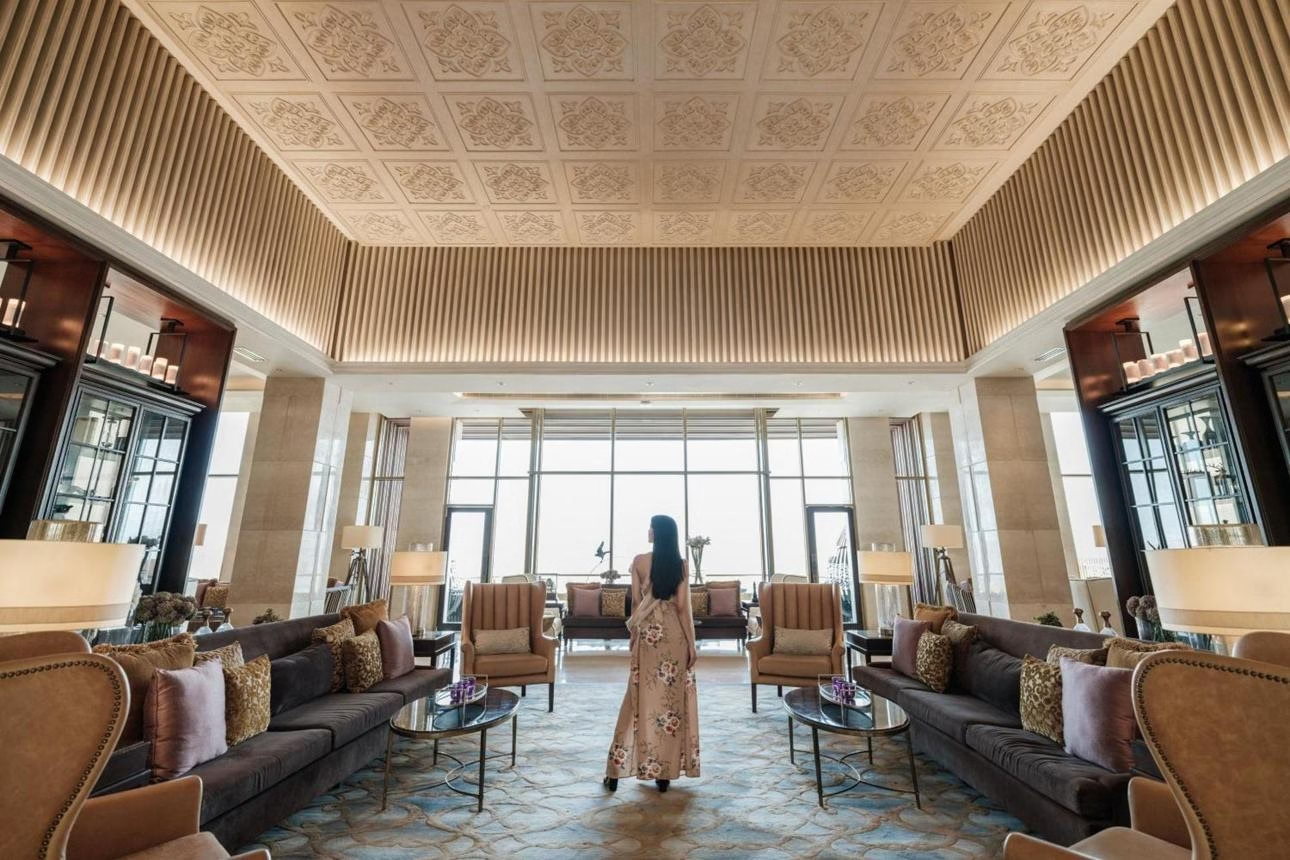
Luxury travel in 2026 still includes beautiful suites, polished service, and marquee brands—but those features alone no longer define a premium trip. Affluent travelers are increasingly prioritizing privacy, wellness, cultural access, flexibility, and time efficiency over visible extravagance. As hotel groups, advisors, and travel data all suggest, “five-star” now means less about status signals and more about whether a trip feels personal, restorative, and genuinely worth the time and cost.
The New Question Luxury Travelers Are Asking
For decades, five-star travel was relatively easy to describe. It meant a recognized luxury hotel brand, attentive service, elevated dining, plush rooms, and a level of exclusivity that clearly separated the experience from mainstream travel. In 2026, that definition is under pressure—not because affluent travelers want less quality, but because they are measuring value differently.
The central shift is this: many luxury travelers are no longer asking, “Is this a five-star property?” They are asking, “Will this trip actually feel worth my time, attention, and money?” That sounds subtle, but it changes everything. A property can still have a Michelin-level restaurant, a famous spa, and a top-tier concierge team, yet feel interchangeable if the itinerary is rigid, the service feels scripted, or the destination experience lacks substance.
This is happening at a moment when luxury demand remains strong, but expectations are rising. Virtuoso’s 2026 Luxe Report found that 67% of its advisors expect travel demand to rise and 55% expect clients to spend more per trip, yet the same body of reporting points to a new traveler mindset centered on space, meaning, and perceived value rather than overt flash alone. American Express Travel’s 2026 trends reporting similarly emphasizes intentionality, with travelers becoming more deliberate about how they spend vacation time and prioritizing unique experiences over generic sightseeing.
For U.S. travelers in particular, that matters because luxury vacations are increasingly competing not only with other hotels, but with other uses of scarce time: milestone family trips, private villa stays, expedition cruising, wellness retreats, and multi-stop itineraries built around specific passions rather than around a hotel brand name. The result is a broader redefinition of luxury—one that still values comfort, but puts more pressure on relevance, ease, and emotional return.
Why the Traditional Five-Star Formula Feels Less Complete
The old formula has not disappeared. Travelers still care about thread count, room design, service consistency, and premium amenities. But those features are increasingly treated as baseline expectations rather than as the core reason to book.
A luxury traveler spending thousands per night in 2026 often assumes certain standards will already be met: excellent bedding, thoughtful housekeeping, quality food, a competent concierge, airport transfers, and a polished physical environment. Once those basics are in place, the real differentiators become more nuanced. How quickly can the property adapt to dietary restrictions? Can the hotel arrange a private after-hours museum visit, not just dinner reservations? Is the spa menu generic, or is there a credible sleep or recovery program behind it? Does the staff understand why the guest is traveling in the first place?
This shift is partly a function of market maturity. Luxury inventory has expanded dramatically over the last decade, and major groups have invested heavily in premium brands and new openings. Marriott, for example, continues to build its global luxury footprint, while reporting resilient demand in the upscale and luxury segments. As more properties compete for affluent travelers, high-end finishes alone do less to distinguish one stay from another.
It is also a function of traveler sophistication. Many affluent Americans have already done the classic five-star circuit: Paris palace hotels, Caribbean beachfront resorts, ski-in/ski-out mountain lodges, and urban luxury towers in New York, London, and Tokyo. Once travelers have experienced that standard repeatedly, novelty and personalization begin to matter more than conventional prestige.
Time Has Become a Luxury Product of Its Own
One of the clearest changes in 2026 is that time itself is being treated as a premium amenity. For many affluent travelers, especially business owners, executives, and dual-income families, the friction surrounding a trip can matter as much as the room itself.
That friction shows up in predictable places: airport transfers that take too long, check-in procedures that feel formal instead of seamless, overbooked spas, restaurant reservations that require too much advance planning, or itineraries packed with “must-see” moments that leave travelers exhausted rather than restored. In response, luxury travel is shifting toward experiences that reduce decision fatigue and protect a traveler’s energy.
In practice, that means a five-star experience in 2026 may be judged by questions like these:
- How quickly can I move from airport to room without hassle?
- How well does the hotel anticipate needs before I have to ask?
- Can the property create a slower, more spacious itinerary rather than overscheduling me?
- Is there a meaningful sense of privacy, quiet, and control?
- Will I leave feeling better than when I arrived?
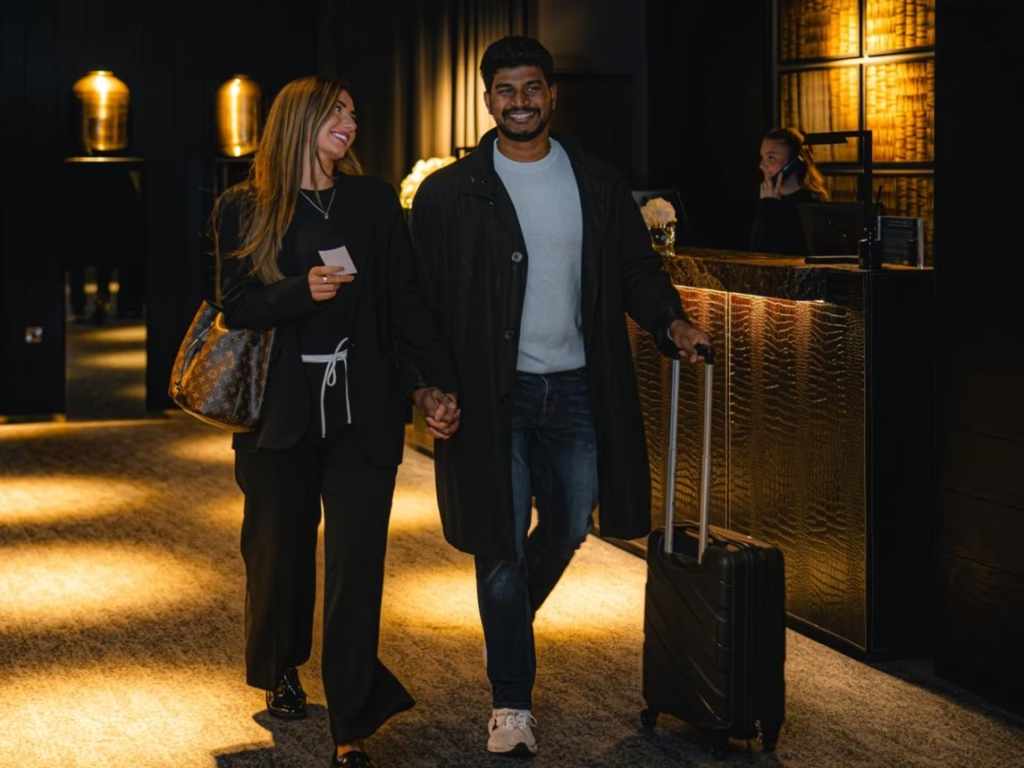
That is one reason travelers are gravitating toward private residences, villa-style accommodations, luxury expedition cruises, and smaller high-service properties that offer fewer touchpoints but more intentional ones. It is also why many hotels are investing in mobile check-in, dedicated arrival teams, in-room wellness, and concierge models that behave more like trip designers than traditional hotel desk staff.
For American travelers who often take shorter luxury trips than their European counterparts—long weekends, one-week family vacations, milestone trips squeezed between work obligations—time efficiency is not a convenience. It is part of the product.
Wellness Has Moved From “Nice Amenity” to Booking Filter
A decade ago, luxury wellness often meant a spa menu, yoga classes, and perhaps a healthy breakfast section. In 2026, wellness has become a far more serious booking criterion, and in many cases a reason to choose one property over another.
Marriott’s luxury-travel reporting has pointed to wellness as a major decision factor among high-net-worth travelers, and recent industry coverage shows hotels pushing well beyond traditional spa offerings. Sleep programs, nutrition consultations, longevity-inspired treatments, recovery-focused fitness, and specialized movement classes are increasingly part of the luxury offer. Even reformer Pilates has become a notable hotel amenity in some high-end properties, reflecting demand for routine-preserving, studio-quality fitness while traveling.
This matters because wellness is no longer being interpreted as “indulgence.” For many luxury travelers, especially those in their 30s, 40s, and 50s, wellness is about function: better sleep, less stress, improved recovery, and maintaining habits while away. A traveler who has built a strong daily routine at home may care less about a grand lobby and more about whether the room lighting supports sleep, the minibar is intelligently stocked, and the gym feels like a real training environment rather than an afterthought.
Consider a common U.S. traveler profile in 2026: a 42-year-old executive couple taking a six-night trip to Southern California or the Italian coast. Ten years ago, the luxury decision might have centered on the prestige of the property, suite size, and pool scene. Today, that same couple may prioritize a hotel with quiet rooms, a serious wellness program, outdoor movement classes, healthy but satisfying dining, and an itinerary designed to avoid burnout. They still want beauty and comfort. They just want those things in service of feeling better, not simply being impressed.
Travelers Want Access, Not Just Amenities
Another reason five-star travel is being redefined is that luxury travelers increasingly expect privileged access to a destination, not just privileged access to a property.
A gorgeous resort can still win on service and design, but many travelers are no longer satisfied with spending most of the trip inside the hotel ecosystem. They want context, curation, and local relevance. That may mean a private market tour with a chef in Mexico City, after-hours access to a historic site in Rome, a conservation-focused wildlife excursion in Kenya, or a deep culinary itinerary in Japan that goes beyond the obvious reservation list.
American Express Travel’s trend reporting highlights the importance of unique and authentic experiences, especially among younger travelers who prioritize distinctive stories and local texture over standard tourist checklists. Virtuoso and advisor commentary have also pointed to the growing appeal of experiential and passion-driven travel, from culinary journeys to expedition cruising and family heritage trips.
This is where some traditional five-star models can feel dated. A hotel may excel at delivering polished luxury within its walls, yet still offer destination programming that feels generic: the same private city tour, the same wine tasting, the same “authentic local dinner” sold to every guest. In 2026, affluent travelers are increasingly sensitive to that difference. They are looking for travel that feels designed rather than packaged.
That has elevated the role of the advisor, concierge, and destination specialist. Human curation remains central to luxury travel precisely because high-value trips are becoming more customized, not less. The affluent traveler is not only buying a room. They are buying judgment—someone’s ability to help them spend limited vacation time well.
Privacy and Space Are Outweighing Public Prestige
One of the quieter but more important changes in luxury travel is the growing preference for privacy over visibility. Not every affluent traveler wants to be seen in the hotel everyone recognizes. In many cases, they want the opposite: space, discretion, and a lower-friction environment.
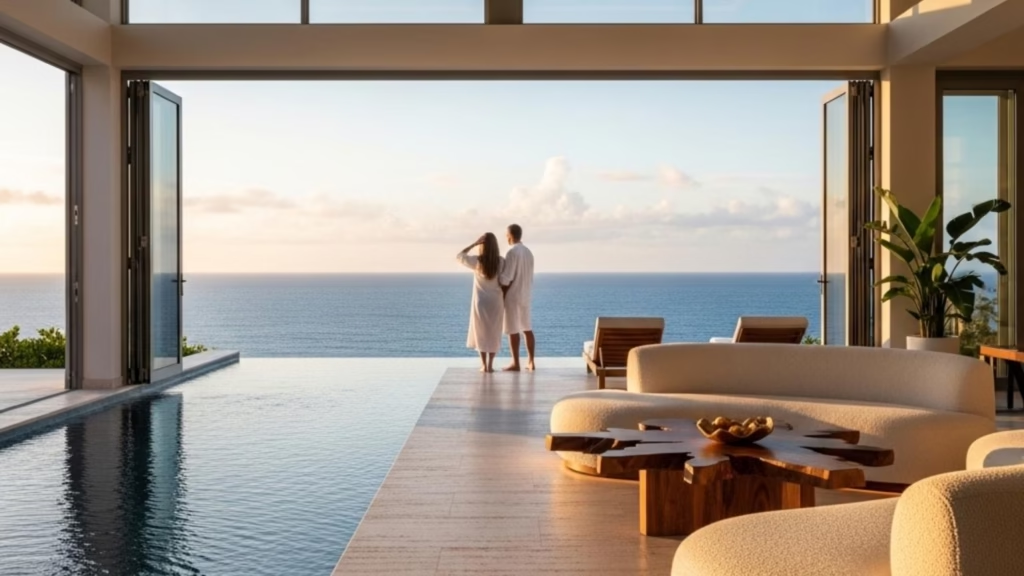
This shows up in the popularity of private villas, residential-style accommodations, buyouts, yacht charters, and smaller ultra-luxury properties where guest count is limited and service can be more personalized. It also shows up in room design preferences. Large terraces, plunge pools, connecting rooms for families, in-suite dining that feels elevated rather than transactional, and separate living spaces all matter more when travelers are using their accommodations as a retreat rather than merely a place to sleep.
The appeal is practical as much as emotional. Multi-generational family trips often need flexible layouts, not just beautiful rooms. Parents traveling with young children may value private space over formal hotel rituals. Couples on restorative vacations may prefer a discreet coastal retreat to a buzzy social hotel. Travelers celebrating milestones may want access to a place that feels protected from crowds, not merely expensive.
Luxury hospitality groups have noticed. Reporting around Marriott’s luxury strategy points to the importance of social connection, residential offerings, and new forms of high-end hospitality that blend service with a more private, home-like feel.
“Visible Luxury” Is Giving Way to “Useful Luxury”
If there is one phrase that best explains the 2026 shift, it may be useful luxury.
Visible luxury is easy to recognize: oversized chandeliers, branded toiletries, dramatic lobbies, elaborate turn-down rituals, and obvious markers of expense. Useful luxury is quieter. It is the hotel that notices a red-eye arrival and has the room ready at 9 a.m. without making the guest negotiate. It is the resort that can pivot dinner timing because a child fell asleep early. It is the expedition cruise that combines beautiful cabins with outstanding guides and a route that actually delivers access to remote places.
Useful luxury also tends to feel more defensible when prices are high. A traveler may happily pay premium rates if the experience reduces stress, creates access, and aligns with the purpose of the trip. The same traveler may resent a similarly priced stay that offers status theater but little flexibility.
For U.S. readers comparing luxury options, that distinction can be more helpful than star ratings. A property with fewer old-school luxury signals may still deliver a better premium trip if it gets the fundamentals of comfort, pace, privacy, and personalization right.
What This Means for How Americans Are Booking Luxury Trips
As the meaning of five-star travel changes, booking behavior changes with it. Many affluent travelers are becoming more selective about when they splurge on traditional hotels and when they choose alternatives.
A few patterns are especially visible in 2026:
- More purpose-led trip planning. Travelers are often starting with the purpose of the trip—rest, celebration, food, family connection, wellness, adventure—before choosing the hotel.
- Greater willingness to mix formats. A trip might combine a luxury city hotel with a private villa, or a resort stay with a few nights on a yacht or expedition vessel.
- More scrutiny around “worth it.” Travelers still spend, but they want clearer reasons behind premium pricing.
- Higher expectations of advisors and concierges. The more expensive the trip, the less tolerance there is for generic planning.
- Growing interest in shoulder-season luxury. Travelers are increasingly choosing less crowded periods if it improves privacy, service access, and overall ease.
That does not mean luxury hotels are losing relevance. Quite the opposite: luxury demand remains robust, and hotel groups continue to invest heavily in premium experiences. But the winning properties are increasingly the ones that understand that five-star travel is no longer judged by visible opulence alone. It is judged by whether the stay solves the right problems and supports the traveler’s actual goals.
How to Evaluate Five-Star Travel More Carefully in 2026
For travelers trying to book better luxury trips—not simply more expensive ones—it helps to ask sharper questions before committing. Marketing language around “elevated experiences” and “curated journeys” can sound impressive while revealing very little.
A more useful evaluation framework includes the following questions:
1) What is the real purpose of this trip?
If the goal is rest, a glamorous but highly social hotel may be the wrong fit. If the goal is family connection, room layout and meal flexibility may matter more than a famous bar program.
2) Which amenities will I actually use?
A property may advertise an award-winning spa, but if you care more about beach access, quiet, and dining flexibility, those should carry more weight.
3) How much friction is built into the experience?
Look at airport transfer times, dining logistics, child policies, cancellation terms, and how easy it is to shape the itinerary around your needs.
4) Does the hotel meaningfully connect me to the destination?
If every experience is generic or outsourced, the property may feel premium but not memorable.
5) Is the luxury visible, useful, or both?
The best trips often combine beauty with function. But if you have to choose, useful luxury usually ages better than status signaling.
Where Five-Star Travel Is Headed Next
The future of five-star travel does not look less luxurious. It looks more precise.
Hotels, cruise companies, villa operators, and advisors are all responding to the same reality: affluent travelers still want exceptional experiences, but they are increasingly unwilling to equate “expensive” with “excellent.” They want travel that respects their time, protects their energy, and reflects who they are at this stage of life.
That has broad implications for the industry. Expect continued investment in wellness, private accommodations, residential-style luxury, destination-led programming, and more flexible service models. Expect luxury brands to talk less about grandeur in the abstract and more about what their experience actually does for the guest. And expect the strongest properties to be those that can combine beauty, competence, privacy, and emotional intelligence in ways that feel effortless rather than performative.
For travelers, the shift is ultimately a healthy one. It moves the conversation away from labels and toward outcomes. Instead of asking whether a trip looks luxurious, travelers are asking whether it feels restorative, memorable, and genuinely well designed. In 2026, that may be the most meaningful upgrade of all.

FAQ: What Travelers Want to Know About Five-Star Luxury in 2026
Is five-star travel still worth it in 2026?
It can be, but travelers are becoming more selective. A five-star property is often worth the premium when it delivers meaningful privacy, strong service, high-quality sleep, wellness support, and access to the destination—not just visual luxury.
Why are affluent travelers moving away from traditional luxury hotels?
Many are not abandoning luxury hotels altogether; they are broadening what counts as luxury. Villas, expedition cruises, residential resorts, and wellness-led stays may better match goals like family time, privacy, or deeper destination immersion.
What do luxury travelers care about most in 2026?
Common priorities include time efficiency, personalized service, wellness, privacy, flexible itineraries, and authentic destination experiences. Travelers still care about comfort and design, but those are often baseline expectations rather than deciding factors.
Are younger luxury travelers changing the market?
Yes. Millennial and Gen Z affluent travelers tend to place high value on distinctive experiences, cultural relevance, and story-worthy travel. That is influencing how luxury brands position itineraries, wellness offerings, and local programming.
Is wellness really that important in luxury travel now?
Yes. Wellness has become a major booking factor, particularly when it goes beyond spa treatments to include sleep, recovery, fitness, nutrition, and mental restoration. Travelers increasingly want to maintain healthy routines while away.
What is “useful luxury” in travel?
Useful luxury refers to premium features that tangibly improve the trip: flexible service, seamless arrivals, excellent sleep, strong concierge support, private space, and thoughtful personalization. It is luxury that makes the travel experience easier, not just more impressive.
Are travel advisors still important for luxury trips?
Very much so. As luxury travel becomes more customized, good advisors help with destination fit, pacing, access, room selection, and problem-solving. Their value often lies in preventing expensive mistakes and elevating the overall experience.
Do luxury travelers still care about hotel brands?
Yes, but brand name alone is less decisive than it once was. Travelers may trust certain brands for consistency, but they increasingly compare properties based on trip purpose, service style, privacy, and local access.
How can I tell if a luxury hotel is actually worth the rate?
Look beyond photos and star ratings. Assess the room layout, transfer logistics, dining flexibility, cancellation terms, destination programming, wellness quality, and how well the property matches the purpose of your trip.
Is luxury travel demand slowing down?
Luxury demand has remained relatively resilient compared with lower-priced travel segments, though traveler expectations are rising and macroeconomic conditions still matter. The bigger change is not whether people are spending, but how carefully they are evaluating what premium travel should deliver.





Leave a Reply