
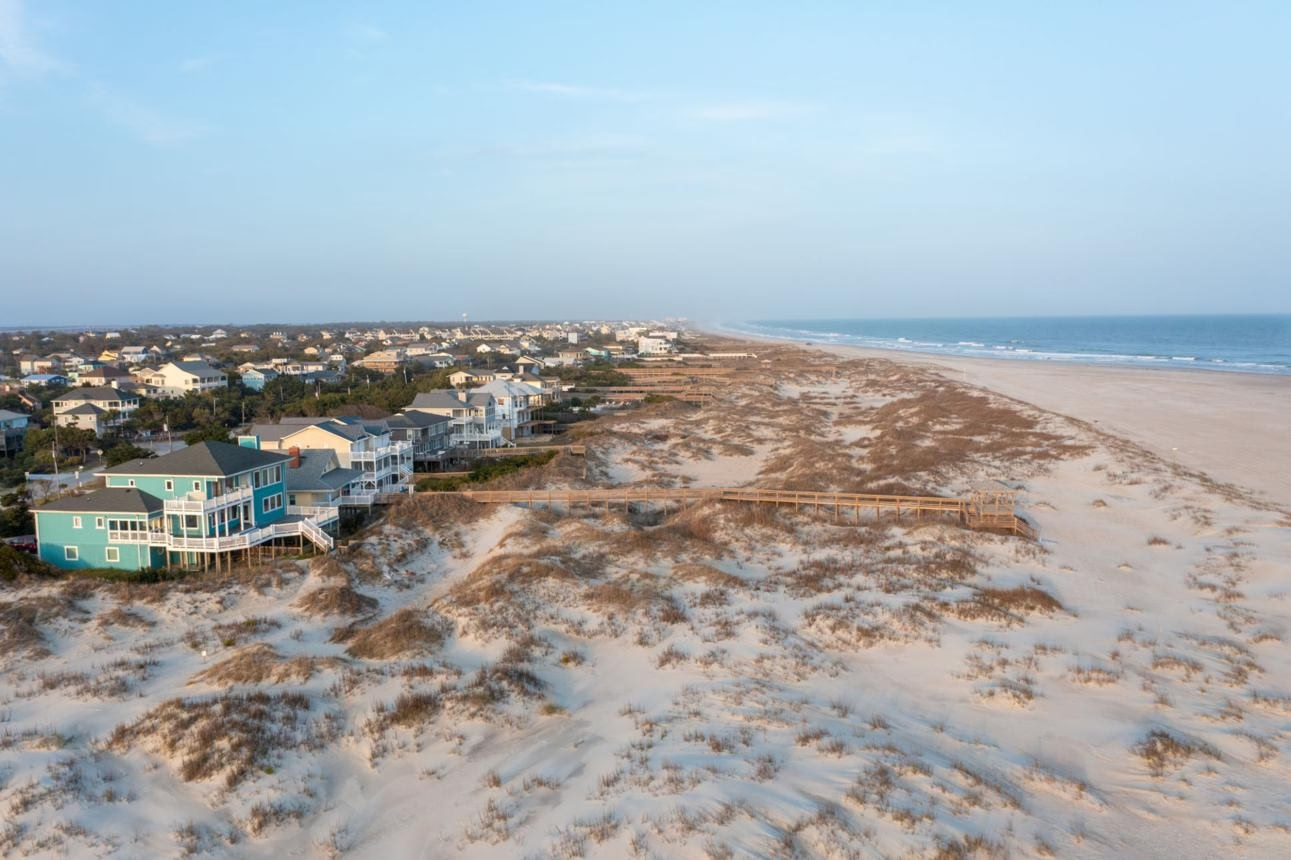
Island travel is gaining momentum among U.S. travelers because it delivers what many beach vacations no longer reliably offer: a clearer sense of place, easier access to nature, and a pace that feels distinct from everyday life. From barrier islands and Great Lakes retreats to tropical U.S. territories, islands appeal to travelers seeking shorter flights, flexible trip lengths, and coastal experiences that feel both restorative and practical.
Why islands are getting a second look from American travelers
For many Americans, the appeal of an island vacation used to be tied mostly to honeymoon imagery, cruise itineraries, or a once-a-year tropical splurge. That picture has changed. More U.S. travelers are now looking at islands as a practical coastal escape rather than an aspirational one. In 2026, that shift reflects a mix of travel behavior, budget strategy, and lifestyle preferences.
Domestic travel remains the backbone of the U.S. leisure market. U.S. Travel’s spring 2026 forecast expects travel spending growth to be supported by domestic demand even amid inflation and broader uncertainty. AAA’s 2026 holiday forecasts also point to continued travel appetite, with 45 million Americans projected to travel over Memorial Day weekend and 72.2 million over the July 4 travel period. Those numbers do not prove that everyone is choosing islands, but they do show that Americans are still prioritizing leisure trips—and increasingly doing so with a closer eye on value, drive time, flexibility, and experience quality rather than sheer distance traveled.
That matters because islands fit the current travel mindset unusually well. They often feel farther away than they actually are. They can work for a three-night reset, a weeklong family trip, or a slower shoulder-season stay. And they tend to deliver a stronger sense of arrival than a standard beach town because the geography itself creates separation. Whether that means taking a ferry to Mackinac Island, flying to Puerto Rico, or driving onto the Outer Banks, the experience starts to feel different before the vacation fully begins.
What travelers actually mean when they search for an “island escape”
In search behavior, “island vacation” does not always mean the same thing. Some travelers mean tropical weather and turquoise water. Others mean a coastal destination with fewer cars, more nature, and less of the sprawl that can make mainland resort areas feel interchangeable. For U.S. travelers, island escapes increasingly fall into four broad categories:
- Tropical U.S.-linked islands such as Puerto Rico, the U.S. Virgin Islands, and the Florida Keys, where warm weather and beach access are central to the trip.
- Barrier islands such as the Outer Banks, Hilton Head, Amelia Island, and Sanibel/Captiva, where beach time mixes with biking, wildlife, seafood, and family rentals.
- Car-light or car-free islands such as Mackinac Island or Catalina Island, where the transportation experience is part of the appeal.
- Nature-forward archipelagos and remote islands such as the San Juan Islands or Dry Tortugas National Park, where kayaking, birding, snorkeling, or park access matter as much as the beach.
This is one reason island travel has broadened beyond the traditional honeymoon or cruise audience. The category now includes multigenerational families booking a house on a barrier island, couples choosing a long weekend with walkable waterfronts, remote workers adding a few extra nights, and retirees seeking shoulder-season coastal trips without crossing the Atlantic.
The practical reasons islands are resonating right now
1) They feel immersive without always requiring a long-haul trip
One of the strongest advantages islands have over many mainland beach destinations is psychological distance. Travelers often want a vacation that feels genuinely separate from normal routines, but they do not always want the cost, complexity, or jet lag of an overseas itinerary. Islands are well positioned for that middle ground.
A three-night trip to Catalina can feel more transportive to a Los Angeles traveler than a standard hotel stay on the Southern California coast. A week on Mackinac Island feels fundamentally different from a Great Lakes city break because there are no private cars in the historic core. A ferry ride into the San Juan Islands changes the pace of a trip before the traveler even checks into a hotel.
That difference matters in a market where many households still want restorative travel but are more deliberate about spending. AP reporting on 2026 summer travel found that many Americans are still taking trips, but shortening them, staying closer to home, or prioritizing nature-based and simpler getaways over higher-cost alternatives. Islands often fit that brief.
2) They align with the shift toward “quality of experience” travel
Travelers are increasingly asking not just “Where should we go?” but “How do we want to spend our time once we get there?” Islands answer that question well because they tend to support slower, more place-specific routines. A good island trip often revolves around a handful of repeated pleasures rather than a packed sightseeing checklist: morning walks on the beach, a favorite coffee stop, a bike ride to a lighthouse, an afternoon swim, sunset seafood, one boat excursion, and a day with no fixed agenda.
This kind of travel is especially appealing to families and burnt-out professionals because it reduces decision fatigue. It also tends to produce a better ratio of effort to reward. Instead of spending a week navigating a major city or hopping between disconnected attractions, travelers can settle into one landscape and enjoy it deeply.

3) Islands work well for multigenerational and group travel
Family travel patterns have moved toward flexible, experience-based trips where several age groups can comfortably coexist. Islands are strong candidates because they often provide a mix of low-effort activities and optional adventure. Grandparents can enjoy the porch and waterfront restaurants; kids can swim, crab, bike, or search for shells; parents can alternate between beach time and short excursions.
The U.S. Family Travel Survey for 2025 found beach vacations remain especially popular in family travel planning, including among grandparents traveling with children and grandchildren. That helps explain why rental-heavy island destinations continue to attract families who want kitchens, separate bedrooms, and easier downtime than a city hotel stay typically offers.
4) Many islands offer a better balance between activity and rest
A common problem with beach vacations is that they can split into two extremes: either a high-cost resort trip with limited local texture, or a busy coastal town where traffic, parking, and crowding undercut the sense of escape. Islands often offer a better middle option.
On an island, the default day can include enough structure to feel satisfying without becoming overplanned. Travelers can snorkel in the morning, visit a historic fort or nature preserve in the afternoon, and still have time to sit outside with a book before dinner. For many Americans, that balance is the point.
Which kinds of U.S.-friendly island trips are growing in appeal?
Barrier islands for easy family logistics
Barrier islands are among the most practical island choices for U.S. travelers because they combine coastal scenery with relatively straightforward access. In many cases, travelers can drive most of the way, stay in a rental home, cook some meals, and spread costs across a group.
Examples include:
- Outer Banks, North Carolina for broad beaches, lighthouse visits, wild-horse excursions, and family rentals.
- Hilton Head Island, South Carolina for golf, biking, tennis, and easy resort infrastructure.
- Amelia Island, Florida for a quieter Florida coast trip with historic Fernandina Beach nearby.
- Sanibel and Captiva, Florida for shelling, wildlife refuges, and a slower Gulf Coast rhythm.
These destinations tend to work well for travelers who want beach access without the higher cost or more complex logistics of a tropical trip.
Car-free and low-car islands for travelers who want a different pace
Mackinac Island remains one of the clearest examples of why island travel is appealing even when the weather is not tropical. The island’s ban on most motor vehicles creates a rare travel environment in the U.S.: horse-drawn carriages, bikes, waterfront walking, historic hotels, and a rhythm that feels intentionally slower. It is not a beach vacation in the conventional sense, but it is a coastal escape in the deeper sense of the phrase.
Catalina offers a West Coast version of that shift in pace. Just off Southern California, it gives travelers boating, snorkeling, hiking, and a resort-town feel without requiring a flight. For urban travelers especially, the ability to reach an island in a few hours and feel fully detached by dinnertime is a meaningful advantage.
Tropical islands and U.S. territories for warm-weather travelers who want fewer international frictions
Puerto Rico and the U.S. Virgin Islands continue to attract travelers who want tropical scenery without some of the complications associated with international travel. For U.S. citizens, Puerto Rico does not require a passport, and the combination of beaches, rainforest access, history, and food gives it a broader appeal than a pure resort destination.
That matters in an environment where some travelers are choosing trips with fewer moving parts. If the goal is to get to warm water, spend a week by the coast, and avoid overcomplicating the trip, U.S.-linked islands have a clear advantage.
Remote and nature-focused islands for travelers who care more about access than nightlife
Some island travelers are not chasing beach clubs or resort pools at all. They want wildlife, national parks, kayaking, or marine ecosystems. The San Juan Islands fit this well for Pacific Northwest travelers interested in whale watching, farm-to-table dining, and ferry-based exploration. Dry Tortugas National Park appeals to travelers who are willing to plan ahead for a more remote payoff: coral reefs, birding, snorkeling, and the historic Fort Jefferson. The park is about 70 miles west of Key West and accessible only by boat or seaplane, which is part of both its challenge and its appeal.

Are island vacations cheaper than other coastal trips?
Sometimes yes, but not automatically. Islands can be excellent value when the trip is designed around the destination’s strengths rather than against them.
A few rules usually hold true:
- Barrier islands are often the most budget-flexible because they support rental homes, grocery shopping, and drive-in access.
- Car-free islands can save on transportation once you arrive but may have higher lodging rates in peak season.
- Tropical islands vary widely by season; airfare and hotel pricing can swing dramatically around school breaks and winter demand.
- Remote islands often cost more in logistics because ferries, seaplanes, limited lodging, and advance bookings reduce flexibility.
Travelers often overspend on island trips when they underestimate transportation details. A low room rate can stop looking cheap once you add ferry tickets, rental car fees on the mainland, resort fees, airport transfers, or checked bags for a family of four. On the other hand, a barrier-island rental with a kitchen can compare favorably to a mainland beach hotel once food and parking are factored in.
What to know before booking an island trip in 2026
Think about access first, not just scenery
A good island trip starts with an honest look at logistics. Ask these questions before booking:
- Do you need a ferry reservation, and how far in advance does it sell out?
- Is the island best visited with a car, a golf cart, a bike, or no vehicle at all?
- Are restaurants and groceries close enough to your lodging to avoid daily driving?
- If weather delays transportation, do you have enough flexibility in your schedule?
- Are you traveling during school-break periods, when both rates and crowds rise sharply?
For families, access often matters more than aesthetics. An island can look perfect online and still be the wrong fit if it requires multiple transfers with young children, limited dining options for dietary needs, or a steep walk from town to the rental.
Shoulder season is often the smartest time to go
Many of the best U.S. island trips are at their best just outside the highest-demand window. Late spring and early fall often bring better rates, fewer crowds, easier restaurant reservations, and weather that is still excellent for beach time or outdoor activities.
That is especially true for destinations such as Hilton Head, Amelia Island, Catalina, and the San Juan Islands. Summer remains popular for school-calendar reasons, but it is not always the most enjoyable time to visit if your schedule is flexible.
Hurricane season should shape planning, not necessarily cancel it
If you are looking at Atlantic, Gulf, or Caribbean islands, hurricane season is a practical consideration. NOAA notes that the Atlantic hurricane season officially runs from June 1 to November 30, with peak activity typically occurring later in the summer and early fall. Florida travel guidance also points to mid-August through mid-October as the highest-risk window for severe storms.
That does not mean travelers should avoid islands entirely during these months. It means they should plan with more care:
- Favor refundable lodging or change-friendly rates.
- Buy travel insurance that covers weather-related interruptions if the trip cost is meaningful.
- Avoid overly tight itineraries that leave no room for ferry or flight disruption.
- Keep an eye on local weather and destination alerts in the week before departure.
For many travelers, the trade-off is worth it because shoulder-season pricing can be attractive. The key is treating weather as a planning factor rather than an afterthought.
How to choose the right island for your travel style
The best island for one traveler can be the wrong one for another. A simple framework helps.
Choose a barrier island if you want:
- Easy family logistics
- A rental house with kitchen access
- Driveable or semi-driveable access
- A classic beach week with optional excursions
Choose a car-free or low-car island if you want:
- A stronger sense of separation from daily life
- Walkability and biking
- Historic hotels or village-style waterfronts
- A long weekend that feels genuinely different from home
Choose a tropical island or U.S. territory if you want:
- Warm water and beach weather outside the mainland summer
- Snorkeling, boating, and resort infrastructure
- A broader mix of food, culture, and beach time
- A winter escape with less international complexity
Choose a remote or nature-heavy island if you want:
- National park access or wildlife viewing
- Kayaking, hiking, birding, or diving
- Fewer crowds and less nightlife
- A trip built around outdoor experiences rather than shopping or entertainment
Common mistakes travelers make when planning island vacations
Island travel is often easier than people expect, but a few mistakes show up repeatedly.
The first is assuming all islands work like resort destinations. Many do not. Some are best for quiet evenings, early mornings, and self-directed exploration rather than nightlife or nonstop dining options.
The second is underestimating transportation cutoffs. Missing the last ferry of the day, booking a late flight that does not line up with boat schedules, or forgetting to reserve a vehicle where supply is limited can turn a smooth trip into a stressful one.
The third is choosing an island based only on photos. Visual appeal matters, but so do beach conditions, walkability, shade, restaurant density, grocery access, and how much there is to do if the weather turns.
The fourth is failing to match the island to the group. A romantic, car-light island can be perfect for a couple and frustrating for a family with toddlers if every meal requires a long walk and strollers do not handle the terrain well.
Why this trend is likely to continue
Island travel fits several durable consumer preferences at once. Americans continue to value leisure travel even when budgets are tighter. Many want experiences that feel restorative rather than performative. Domestic and near-domestic trips remain attractive when travelers are balancing cost, convenience, and uncertainty. And beach vacations still rank high for families, couples, and multigenerational groups.
Islands sit at the intersection of those preferences. They offer the emotional payoff of “getting away” without always requiring a huge leap in cost or complexity. They can feel classic without feeling generic. And in a travel market crowded with interchangeable resort imagery, islands still offer one of the simplest but hardest-to-replicate luxuries: a destination whose geography naturally slows you down.
The smarter way to think about an island vacation
The strongest island trips are not necessarily the farthest, most expensive, or most exclusive ones. They are the trips where the setting changes how you actually spend your time. That might mean trading traffic for bikes, crowded itineraries for a porch and a shoreline walk, or a standard beach hotel for a place where the ferry ride itself becomes part of the memory.
For U.S. travelers, that is the real story behind the island trend. It is not only about palm trees or postcards. It is about choosing a coastal trip that feels more contained, more intentional, and often more restorative than the alternatives.

Frequently Asked Questions
1) What is the best U.S. island destination for a first-time island vacation?
For many travelers, a barrier island such as Hilton Head, Amelia Island, or the Outer Banks is the easiest starting point because access is straightforward, lodging options are broad, and you can combine beach time with dining, biking, and family activities.
2) Are U.S. island vacations good for families with kids?
Yes. Islands often work well for families because they combine beach time with low-pressure activities such as biking, shelling, wildlife tours, mini-golf, fishing, or short boat trips. Rental homes also make meals and downtime easier.
3) Do I need a passport for Puerto Rico or the U.S. Virgin Islands?
U.S. citizens do not need a passport to travel to Puerto Rico or the U.S. Virgin Islands, though it is always wise to check current airline and identification requirements before departure.
4) What is the cheapest time to book an island vacation in the U.S.?
Late spring and early fall are often the best value periods for many U.S. islands. You may find lower lodging rates, lighter crowds, and good weather outside school-holiday peaks.
5) Are island trips better for short getaways or full-week vacations?
Both can work. Catalina, Mackinac, and some East Coast islands are excellent for three- to four-night trips, while destinations such as Hilton Head, Sanibel, Puerto Rico, or the Outer Banks often justify a full week.
6) How far in advance should I book ferry-based island travel?
For popular summer periods, booking several months ahead is wise—especially if you need vehicle reservations, specific ferry times, or limited lodging. Remote islands and national-park-adjacent destinations may require even more lead time.
7) Is hurricane season a bad time to visit islands?
Not necessarily, but it requires more careful planning. Atlantic and Caribbean destinations carry higher weather risk from June through November, especially from mid-August to mid-October. Flexible bookings and travel insurance can make a big difference.
8) Are islands always more expensive than mainland beach towns?
No. Some are, especially remote or luxury-focused islands, but many barrier islands can be cost-effective for groups because rental homes, kitchens, and drive-in access help control spending.
9) What should I prioritize when choosing between island destinations?
Start with the type of trip you want: family beach week, romantic long weekend, tropical winter escape, or nature-focused adventure. Then compare access, lodging style, transportation needs, and the balance between relaxation and activities.
10) Which U.S. islands are best if I do not want to rent a car?
Mackinac Island and Catalina are strong options because the experience is designed around walking, biking, local transit, or limited vehicle use. Some resort areas in Puerto Rico also work well without a rental car if you stay strategically.





Leave a Reply